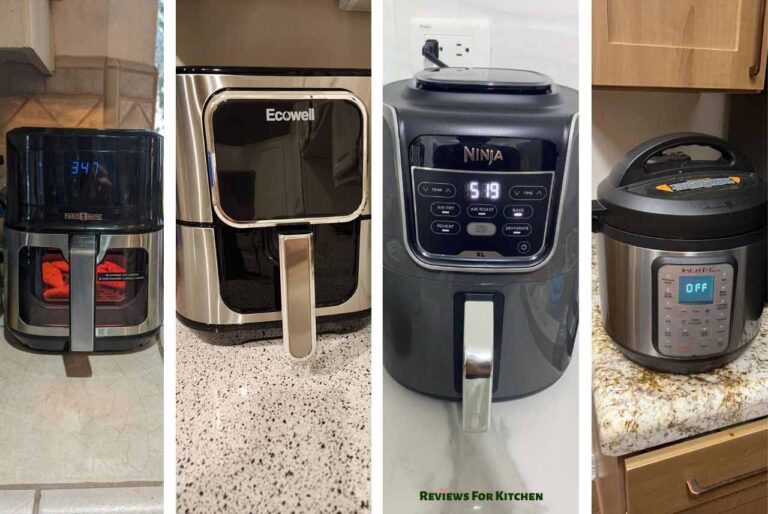
My sister called me last Black Friday from the middle of a Target aisle, completely overwhelmed. She was staring at a wall of air fryers — twelve different models, prices ranging from $39 to $279 — and had absolutely no idea which one to grab. She texted me a photo of the shelf and just typed: “HELP.” Sound familiar?
Air fryers have exploded in popularity, and the options are genuinely bewildering right now. That’s exactly why I put together this best air fryer buying guide — not to push you toward any specific brand, but to actually explain what the specs mean, which features matter for your cooking style, and which ones are just marketing fluff dressed up as innovation.
By the time you finish this guide, you’ll know exactly what size to buy, whether basket or oven style suits your kitchen better, how much wattage you actually need, and which extra features are worth paying for. No confusion, no regret purchases.
Let’s cut through the noise.
Quick Takeaways Before You Shop
- Capacity is the most important decision — get the right size for your household first, then look at features
- Basket-style air fryers are better for everyday frying; oven-style are better for versatility and larger families
- Wattage matters for speed and evenness — aim for at least 1500W, ideally 1700W or more
- Most “premium” features like dehydrating and rotisserie are genuinely useful if you’ll actually use them
- Non-toxic, PFAS-free coatings are worth seeking out, especially if you cook frequently
- Cleaning ease should factor into your decision just as much as cooking performance
How Air Fryers Actually Work (And Why That Matters When Buying)
Before you spend a dollar, it helps to understand what you’re actually buying. Because once you get how an air fryer works, a lot of the buying decisions start to make more sense on their own.
It’s Really a Convection Oven — Just a Compact One
Here’s the thing most people don’t realize: an air fryer isn’t some revolutionary cooking technology. It’s a compact countertop convection oven with a very powerful fan. The fan circulates hot air at high speed around the food, which rapidly removes moisture from the surface and creates that crispy exterior you’re after — without submerging everything in oil.
The “frying” part is honestly a bit of a marketing stretch. You’re not frying in the traditional sense. You’re using rapid hot air circulation to mimic the texture of fried food, which works surprisingly well for things like chicken wings, frozen fries, and roasted vegetables. According to Serious Eats’ deep dive on air fryer cooking, the results are genuinely excellent for high-moisture foods that benefit from surface crisping — though they’re honest that it’s not identical to deep frying.
Why Airflow Design Matters More Than Brand Name
The quality of an air fryer comes down almost entirely to how well it circulates hot air. A poorly designed unit creates hot spots — one part of your food gets crispy while another part stays pale and soft. A well-designed unit circulates air evenly from all directions, giving you consistent results throughout the basket or tray.
This is why some $50 air fryers work great and some $150 ones disappoint — brand recognition doesn’t guarantee airflow quality. Look for user reviews specifically mentioning even cooking results, not just overall satisfaction scores.
What Air Fryers Are Actually Great At
I’ve learned that air fryers perform really well for some things and less impressively for others. Being realistic about this saves you from buyer’s remorse.
Air fryers genuinely excel at:
- Frozen foods (fries, nuggets, fish sticks) — faster and crispier than an oven
- Chicken wings and thighs — the skin gets remarkably crispy
- Roasted vegetables — broccoli, Brussels sprouts, asparagus
- Reheating pizza and fried foods without making them soggy
- Bacon — less splatter, great results
They’re less impressive for anything that needs to be fully submerged in liquid during cooking, large roasts that exceed the basket size, or delicate foods that need very precise, gentle heat.
Choosing the Right Size Air Fryer for Your Household
If you only take one thing away from this buying guide, make it this: get the right size for your household first, then think about features. An air fryer that’s too small for your family is frustrating every single time you use it. Too large and it takes up counter space without adding real value.
Capacity by Household Size
Air fryer capacity is measured in quarts. Here’s a practical breakdown of what actually fits in each size range — not just what the box claims:
| Household Size | Recommended Capacity | What Fits Comfortably |
|---|---|---|
| 1-2 people | 2–4 quarts | 2 chicken breasts, single-layer fries, 2 salmon fillets |
| 3-4 people | 5–6 quarts | Full rack of ribs (cut), 6-8 wings, a small whole chicken |
| 5+ people or meal preppers | 7–10 quarts | Larger roasts, multiple batches without constant reloading |
| Families wanting oven-style versatility | 10–26 quarts (oven-style) | 12″ pizza, full sheet pan of vegetables, rotisserie chicken |
A really common mistake: people buy a 3-quart air fryer because it’s cheaper, then end up cooking in 3 separate batches every dinner. That defeats the whole point of a quick, convenient appliance. When in doubt, go one size larger than you think you need.
Counter Space vs. Capacity Trade-Off
Bigger isn’t always better if you’re working with a small kitchen. A 10-quart oven-style air fryer is genuinely the size of a large microwave. Measure your counter space and the clearance above it (air fryers need 5-6 inches of clearance above for heat venting) before you commit to anything. A 6-quart basket-style model is a solid all-around choice that fits comfortably in most kitchens without monopolizing the counter.
Think About Your Cooking Style Too
If you’re primarily using the air fryer to crisp up weeknight dinners for two, a 4-5 quart basket model is probably ideal. If you want to do weekend meal prep, cook larger proteins, or use it as a second oven when hosting, go bigger. Your cooking ambitions should drive this decision as much as your household size does.
Basket-Style vs. Oven-Style Air Fryers: Which Is Right for You?
This is the design decision that trips people up most often. Both styles work well — but they work better for different people and different kitchens. Let me break down what actually makes them different in day-to-day use.
Basket-Style Air Fryers: Simple, Fast, Compact
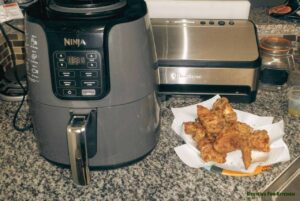
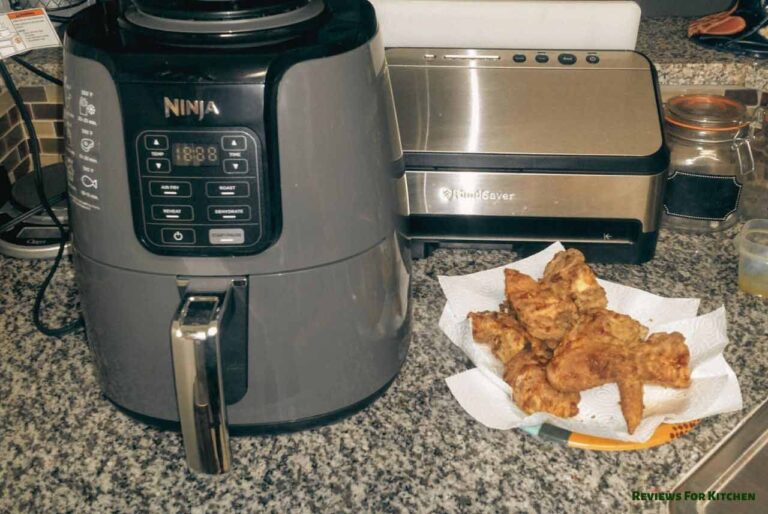
The classic air fryer design: a pull-out drawer with a perforated basket inside. You load food, slide it in, set the temp and timer, and go. Simple. Fast. Takes up less counter space than an oven-style model.
The airflow in a good basket-style fryer circulates powerfully from above and around the basket, which is great for getting that crispy texture efficiently. The shake-able basket also helps — you can pull it out, give it a toss mid-cook, and slide it back in easily.
Drawbacks? You can’t see your food cooking without pulling the basket out. The basket capacity limits you to single-layer cooking for best results (stacking food reduces airflow and leads to uneven results). And most basket models max out around 6-8 quarts.
Oven-Style Air Fryers: More Versatile, More Counter Space
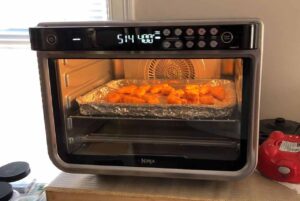
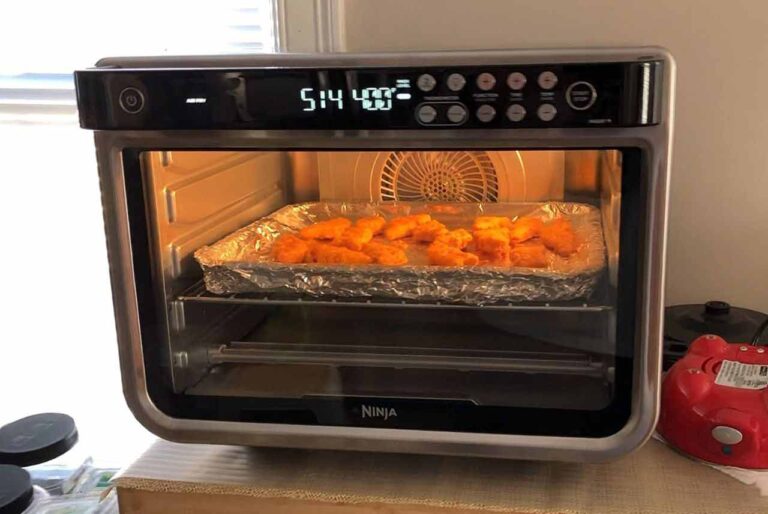
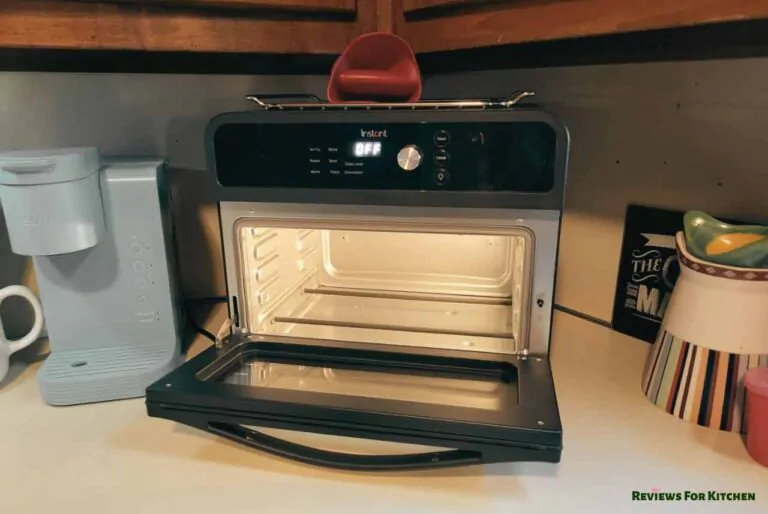
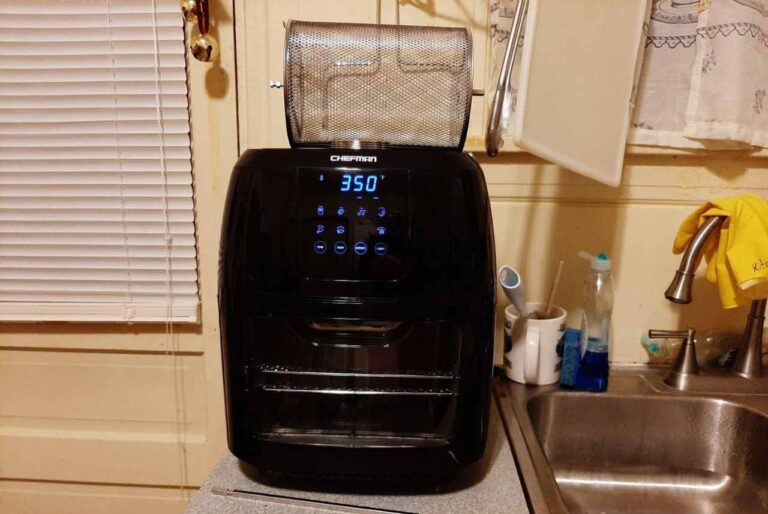
Oven-style air fryers look like a compact toaster oven with an air fry function. They come with racks, trays, and often a rotisserie attachment. The glass front door means you can actually watch your food cook, which is surprisingly satisfying.
The bigger interior lets you use multiple racks at once — cooking chicken on one level and vegetables on another, simultaneously. That’s a genuinely useful feature for anyone making full dinners. Many oven-style models also double as a dehydrator, toaster, broiler, and convection oven, which makes them much more versatile appliances overall.
The trade-off: they take up significantly more counter space, they’re often slower to preheat, and the airflow can be less aggressive than a basket model — which means some foods get slightly less crispy. For dehydrating features specifically, our post on the best air fryer with dehydrator reviews the top oven-style models that handle both functions really well.
Quick Decision Framework
- Choose basket-style if: you want speed and simplicity, you have a smaller kitchen, you mostly cook for 1-4 people, and crisping is your main priority
- Choose oven-style if: you cook for larger groups, want multi-rack capability, need dehydrating or rotisserie functions, or want it to replace multiple appliances
Key Features to Look For (And Which Ones to Ignore)
The feature list on an air fryer box can be overwhelming — some of it is genuinely useful, and some of it is just marketing language for things the appliance does adequately at best. Here’s an honest breakdown.
Features That Actually Matter
Wattage: This directly affects how fast and how evenly your air fryer cooks. Aim for at least 1500W for a basket-style unit; 1700W-1800W is even better. Higher wattage means faster preheating and more consistent results. Cheap models often cut corners here, which shows up as pale, uneven cooking.
Temperature range: Look for a range of at least 180°F to 400°F. The low end is useful for dehydrating and keeping food warm; the high end is what gives you proper crisping and searing. Some premium models go up to 450°F, which is genuinely useful for very fast high-heat cooking.
Presets vs. manual controls: Let me be real with you — most presets are just pre-programmed time and temperature combinations that you could dial in yourself. Manual control (set your own temp and time) is more flexible and more useful in the long run. Presets are convenient for beginners but become less important the more you use the machine.
Non-stick coating quality: The basket lining matters a lot, both for cooking performance and health. Many older models use PTFE (Teflon) coatings that can degrade at high temperatures over time. If you cook frequently, a PFAS-free ceramic coating is a meaningful upgrade. Our guide to the best non-toxic air fryer goes deep on which coatings are genuinely safer and which brands have made the switch.
Features Worth Having If You’ll Use Them
Rack and multi-layer cooking: If you regularly cook for 4+ people or want to do full meals in one go, an air fryer with racks is a genuine quality-of-life upgrade. See our breakdown of the best air fryers with racks for models that actually execute this well rather than just including flimsy wire shelves as an afterthought.
Dehydrator function: If you make jerky, dry herbs, or want to preserve fruits, this is a legitimately useful feature. It requires the air fryer to hold steady low temps (95°F–165°F) for many hours — not all “dehydrator” settings do this reliably, so check reviews before buying.
Shake reminder: Some models pause and beep mid-cook to remind you to shake the basket. Minor feature, but genuinely helpful when you’re doing other things and don’t want to babysit the timer.
Features You Probably Don’t Need to Pay For
- Wi-Fi / app connectivity: Sounds cool, adds to the price, rarely gets used after the first week
- Built-in thermometer probes: Useful in theory; implementation is often clunky on most models
- Excessive preset programs (10+): Most people use 3-4 settings regularly — paying for 12 presets is mostly paying for marketing
- Non-stick sprayer attachments: Cheap add-ons that usually don’t work well; use a separate oil mister instead
Energy Use, Noise, and Cleaning: The Practical Stuff Nobody Talks About Enough
Everyone focuses on cooking performance when buying an air fryer. But the things that will actually determine whether you use it daily or shove it in a cabinet after six weeks are the practical day-to-day factors — energy use, how loud it is, and how annoying it is to clean.
Energy Efficiency: Air Fryers vs. Your Oven
One of the genuine selling points of air fryers is that they use significantly less energy than a full-size oven for small to medium cooks. An oven typically draws 2,000-5,000 watts and takes 10-15 minutes to preheat. A 1700W air fryer preheats in 3-5 minutes and finishes the job in less time overall — which adds up to real energy savings over hundreds of cooks per year.
That said, not all air fryers are equally efficient. If energy use is a priority for you — especially in Canada where electricity rates vary significantly by province — our guide to the best energy-efficient air fryer covers which models deliver the most cooking output for the least power draw.
Noise Level
Air fryers are not silent appliances. The fan is running at high speed the entire cook, and most models produce somewhere between 55-65 decibels — roughly equivalent to a normal conversation or a running dishwasher. In an open-plan kitchen, this is noticeable but not disruptive. In a small apartment, some people find it genuinely annoying.
If noise sensitivity is a concern, look specifically at user reviews mentioning sound levels. Some brands (Cosori, for example) have quieter fan designs than others at the same price point. This rarely shows up in spec sheets — you have to dig into real user feedback to find out.
How Easy Is It to Actually Clean?
I used to underestimate this completely. Then I bought an air fryer with hard-to-reach crevices in the basket, and cleaning it became enough of a chore that I started using it less. Don’t make that mistake.
Look for:
- Dishwasher-safe baskets and trays (most modern ones are, but verify)
- Removable crumb tray (especially on oven-style models)
- Smooth interior walls without excessive ridges or hard-to-reach corners
- Non-stick coating that actually releases food without aggressive scrubbing
For keeping your air fryer in top shape long-term, our step-by-step post on how to clean the Power XL Air Fryer in 7 steps has techniques that translate to virtually any basket-style model — including how to safely tackle baked-on grease without damaging the coating. And if you’re wondering about using aluminum foil to make cleanup even easier, our guide on how to put aluminum foil in an air fryer covers exactly how to do it safely without blocking critical airflow.
What to Expect at Each Price Point: $50 to $300
The air fryer market spans a huge price range, and the jump in quality isn’t always linear. Here’s a realistic breakdown of what your money actually gets you at each tier.
Budget Range ($40–$80): Functional, With Trade-Offs
There are genuinely decent air fryers in this range — Cosori, Ninja, and Instant Pot all have entry-level models that perform respectably. The trade-offs are typically thinner construction, less powerful fans, noisier operation, and non-stick coatings that may not hold up as long with frequent high-heat use.
For a person who wants to try air frying without a big commitment, or for a college student cooking for one, this range absolutely works. Just don’t expect it to last 5-7 years of daily cooking the way a mid-range or premium model might.
Mid-Range ($90–$160): The Sweet Spot
This is where most people should be shopping. At this price point, you get better build quality, more consistent airflow, quieter fans, and more reliable non-stick coatings. Brands like Cosori Pro, Ninja Foodi, and Instant Vortex Plus all land in this range with strong real-world performance.
According to America’s Test Kitchen’s rigorous air fryer testing, mid-range models from established brands consistently outperform budget alternatives in evenness of cooking and long-term durability — and the performance gap between mid-range and premium models is much smaller than the price gap suggests.
Premium Range ($170–$300+): Worth It for Specific Use Cases
Premium air fryers — Breville, Philips, higher-end Ninja models — offer superior build quality, better warranty support, more sophisticated temperature control, and often genuinely better non-toxic coatings. If you’re cooking daily for a family, replacing an old toaster oven, or want an appliance that’ll last a decade, the premium tier makes sense.
But let me be honest: for someone who air fries a few times a week for themselves or a couple, a $120 mid-range model will produce nearly identical food results. The premium price is really about durability, build feel, and feature depth — not dramatically better chicken wings.
Frequently Asked Questions
What size air fryer do I need for a family of 4?
A 5-6 quart basket-style air fryer comfortably handles meals for 4 in most cases. If you frequently cook large proteins like whole chickens or want to do multiple things simultaneously, consider going up to a 7-8 quart or an oven-style model with multiple racks.
Are air fryers actually healthier than deep frying?
Yes, meaningfully so. Air frying achieves similar texture using a light spray of oil rather than full submersion in fat — which can reduce the fat content of a dish by 70-80% compared to deep frying. The overall calorie difference in a real meal is significant over time, though air fried food isn’t zero-calorie either.
Can I replace my oven with an air fryer?
For small to medium cooks, absolutely — and you’ll often get faster, crispier results. For large roasts, big batch baking, or cooking for a crowd, a full-size oven is still necessary. An oven-style air fryer in the 20-26 quart range gets closer to a true oven replacement for most daily cooking tasks.
How much wattage do I need in an air fryer?
Aim for at least 1500W, with 1700W-1800W being the sweet spot for consistent results. Lower wattage units preheat more slowly and can produce uneven cooking, especially with larger or denser foods. Wattage is one of the specs most worth paying attention to.
Do I need to preheat an air fryer?
For most foods, preheating for 3-5 minutes noticeably improves results — especially for anything where a crispy exterior matters (wings, fries, breaded foods). Some newer models have faster heating elements that make this less critical, but preheating is still a good habit that takes almost no time.
Is a basket air fryer or oven-style air fryer better?
Basket-style wins for convenience, speed, and crisping power for everyday cooking. Oven-style wins for versatility, multi-rack cooking, and larger capacity. The right choice comes down to your household size and what you plan to cook most often — both styles work excellently in the right context.
The Right Air Fryer Is the One That Fits Your Actual Life
There’s no single “best” air fryer — there’s only the best one for your kitchen, your household, and your cooking habits. If you take nothing else from this guide, take this: get the right size first, prioritize wattage and coating quality over flashy presets, and don’t overspend on features you won’t use regularly.
Start with the capacity decision, choose your style (basket vs. oven), pick a mid-range model from a reputable brand, and you’ll land somewhere really good. Air fryers are genuinely useful appliances — once you find the right fit, you’ll wonder what took you so long.
Once you’ve got your air fryer, dive into our related guides to get the most out of it: learn how to safely use aluminum foil in your air fryer for easier cleanup, explore our picks for the best air fryer with dehydrator function if you want to expand what it can do, and check how to properly clean your air fryer to keep it running great for years.
Have questions about a specific model or use case? Drop them in the comments — happy to help you figure out the right pick.