My neighbor Dave bought a pellet smoker last spring — spent about $450, used it twice, and it’s been sitting under a tarp ever since. Not because it’s a bad grill. Nobody told him that pellets absorb moisture if left in the hopper for weeks, and nobody mentioned the fire pot fills with ash faster than expected. Two rough cooks and he lost interest.
Meanwhile, Tom down the street has been running a $180 Weber Smokey Mountain since 2019. He cooks every single weekend, keeps notes in a small spiral notebook, and makes a brisket that honestly rivals some of the best I’ve eaten. He’d never swap it for a pellet smoker — he loves managing the fire.
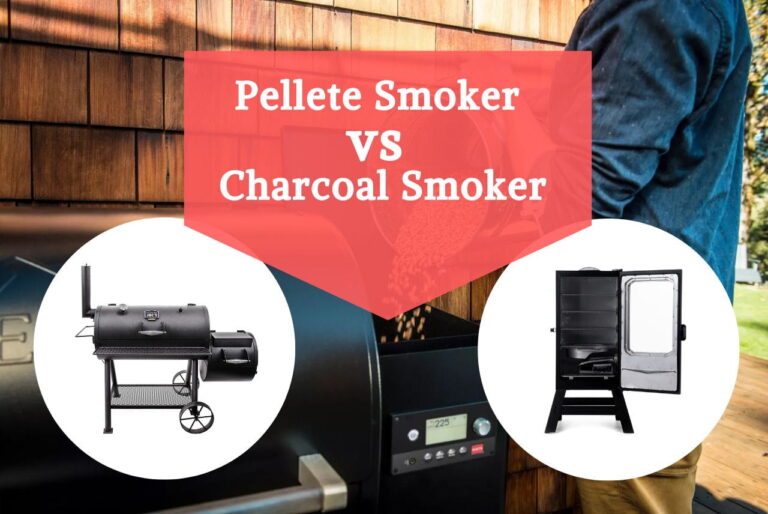
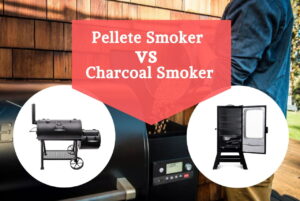
The debate over pellet smoker vs charcoal smoker for beginners isn’t really about which type is objectively better. It comes down to which one fits the specific cook holding this article. Both types behave completely differently, reward different personalities, and cost different amounts to run long term. If you’re also comparing pellet against wood-burning options, our breakdown of the pellet smoker vs offset smoker covers that side of the decision too.
⚡ Short Version — Key Takeaways
- Pick pellet for set-and-forget ease, consistent temps, and beginner-friendly results
- Pick charcoal for deeper traditional smoke flavor and learning the craft of fire
- Charcoal costs less upfront — pellet saves more time per cook
- Pellet suits busy lifestyles; charcoal suits dedicated weekend sessions
- Both can produce outstanding BBQ — your cooking personality decides the winner
How Each Type Actually Works
Most comparison articles skip the mechanics and jump straight to pros and cons. That’s a mistake. Without understanding how each smoker operates, the comparisons won’t mean much.
How a pellet smoker works
Compressed wood pellets — small cylinders of hardwood dust roughly the size of a pencil eraser — are the fuel source. Loading them into a side hopper starts the process: an electric auger feeds pellets into a fire pot at a controlled rate, a hot rod ignites them, and a fan circulates the heat and smoke throughout the cooking chamber. A digital controller reads the internal temperature and automatically adjusts the feed rate to stay within a few degrees of your target.
Think of it as a wood-fired outdoor oven. Set a temperature, close the lid, and walk away. On a full 12-hour brisket cook, you might check on things three or four times total — once to spritz, once to wrap, once to pull. That’s genuinely the extent of the involvement required.
Smoke flavor is real, coming from actual hardwood — hickory, apple, cherry, mesquite, depending on which pellets you buy. Because the fire is controlled and contained, though, that smoke is lighter and cleaner than what an open charcoal fire produces. More of a background note than a front-row feature.
How a charcoal smoker works
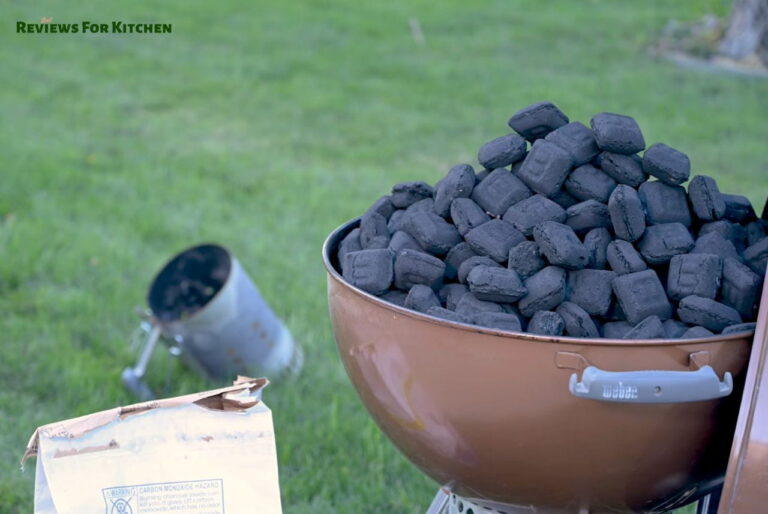
Charcoal smokers are deliberately low-tech. Light charcoal in a chimney starter — never lighter fluid, which ruins the flavor — then transfer it to the firebox or charcoal bowl. Add wood chunks for smoke. Not wood chips, not pellets. Solid chunks of hardwood, roughly fist-sized, give you the sustained smoke these cookers are known for.
Temperature management is entirely manual: open the bottom vent more and the fire gets hotter; close the top vent partially and the heat drops. Everything responds to airflow. According to Serious Eats’ detailed guide on charcoal fire management, understanding this vent relationship is the single most important skill a new charcoal cook can develop.
This manual process is exactly why charcoal flavor is so distinctive. The interaction between burning wood, charcoal, airflow, and fat dripping onto hot coals creates layers of complexity that an automated system can get close to but never fully replicate.
Pellet Smoker vs Charcoal Smoker: Head-to-Head
Here’s the full comparison across the six categories that actually matter for a first-time buyer.
| Category | 🟠 Pellet Smoker | ⚫ Charcoal Smoker |
|---|---|---|
| Ease of use | Set-and-forget — digital control ✓ | Real learning curve — expect a few rough early cooks |
| Temperature control | Holds ±5–10°F automatically ✓ | Manual vent adjustment, weather-dependent |
| Smoke flavor | Light, clean, consistent | Deep, complex, traditional ✓ |
| Startup cost | $300–$600+ for solid beginner model | $100–$300 for quality entry-level ✓ |
| Fuel cost (long cook) | ~$15–$18 in pellets | ~$8–$12 charcoal + wood chunks ✓ |
| Versatility | Smoke, bake, roast, grill ✓ | Optimized for low & slow |
| Cleanup | Ash vacuum + grease bucket every few cooks | Full ash removal after every single cook |
| Product links | Top rating- On Amazon, On Website Budget Friendly- On Amazon, On Website | Top Rating- On Amazon, On Website Heavy Duty & budget friendly- On Amazon |
Ease of use and the learning curve
Pellet smokers win this category and it isn’t close. Dial in a temperature, load the hopper, close the lid, and go do something else. Your first cook on a pellet smoker has a genuine chance of producing great food — which is a real advantage when you’re just getting started.
Charcoal is a different experience entirely. Those first few sessions tend to follow a familiar pattern: the fire gets too hot, the vents get closed, the temperature drops too far, the vents get opened again, the temperature spikes again. It’s not dramatic — it happens to almost everyone at the start. After six or seven sessions, though, something clicks. You start reading your specific smoker’s behavior, accounting for weather conditions, anticipating how it responds to vent changes.
The key is going in with realistic expectations. Don’t commit to an expensive cut of meat on your first charcoal cook.
Temperature control — bigger than most beginners expect
With a pellet smoker, temperature is essentially a solved problem. Set 225°F and walk away — it holds 225°F.
Charcoal has a lag built into the system. Adjust a vent and the temperature takes 5 to 10 minutes to respond. By the time the change registers, it’s easy to have already overcorrected. Chasing temperature swings on an 8-hour pork shoulder is genuinely exhausting until your instincts catch up with the process. Our full guide on how to control temperature on a charcoal grill explains the vent system in detail — reading it before your first cook makes a real difference.
Flavor — the honest answer
Charcoal produces better flavor. That’s the honest answer, and most pellet grill articles avoid saying it clearly.
On a well-managed brisket after 14 hours, the difference in bark formation, smoke ring depth, and overall complexity is noticeable to anyone who has eaten both. Competition BBQ judges — people who do this professionally — can usually identify the cooking method from the result alone.
That said, the gap is smaller than you might expect on most other cuts. For ribs, pork butt, chicken thighs, and salmon, most people at a backyard cookout won’t detect a meaningful difference. Pellet smokers also deliver something charcoal often doesn’t: consistency. A stable 225°F for 12 hours produces more predictable results than a charcoal fire that swings 40 degrees in either direction while you’re learning.
💡 Honest Take
Pellet wins on consistency. Charcoal wins on flavor depth. For most home cooks the pellet results are completely satisfying. For anyone chasing competition-level bark and smoke ring, charcoal is where you eventually end up.
Cost — upfront and every cook after
A reliable beginner pellet smoker — Pit Boss 700, Traeger Pro 575, that price range — costs $300 to $550. Wood pellets run about $20 to $25 per 20 lb bag. At 225°F in moderate weather, the burn rate is roughly 1 lb per hour, so a 14-hour brisket cook uses around 12 to 15 lbs of pellets. One thing worth knowing before you buy a large bag: not all pellet brands work identically across all grill brands. Our post on using Traeger pellets in a Pit Boss smoker covers compatibility in detail.
Charcoal setups cost significantly less to get started. A Weber Smokey Mountain 18-inch runs about $230. A solid barrel smoker can be found for $100 to $150. Fuel per session — charcoal plus wood chunks — runs $8 to $12. Over a full year of weekly cooks, charcoal is typically $100 to $200 cheaper to run. America’s Test Kitchen’s charcoal grill testing consistently found that mid-range charcoal setups outperform their price point in real-world use — which tracks with what most experienced backyard cooks already know.
Who Should Choose a Pellet Smoker?
Rather than just saying “pellets are easier,” here’s the more useful question: does your actual life fit the way a pellet smoker works?
Signs a pellet smoker fits your cooking life
- Your weekends are full and the smoker needs to run in the background. Loading a hopper at 7am, attending a soccer game, coming back at noon to check progress, and sitting down to eat at 6pm — that’s a pellet smoker workflow. It genuinely works that way.
- You’ve never smoked anything before and want decent results from your first few attempts. The learning curve on a pellet smoker is mostly about the meat itself — seasoning, internal temperatures, resting. Fire management gets removed from the equation entirely.
- Cold or windy weather is part of your cooking reality. Digital controllers compensate for temperature drops automatically, which is a genuine advantage if you cook in Canada or the northern United States.
- One piece of equipment needs to handle multiple cooking tasks — smoking, roasting, baking, limited grilling — without you buying separate gear for each job.
What pellet smokers won’t give you
Most pellet grill articles skip this part. If smoke flavor complexity eventually becomes important to you — and it often does once you get serious about BBQ — a pellet smoker alone won’t fully satisfy you. The results are genuinely good, better than what most beginners produce on charcoal in their first year. But the deepest, most traditional smoke flavor requires a charcoal or offset setup at some point. The majority of serious pellet grill owners I know ended up with both types eventually.
Who Should Choose a Charcoal Smoker?
Charcoal gets a bad reputation from people who tried it once, got frustrated with temperature swings, and switched. That’s a real shame, because in the right hands it produces the best backyard BBQ available at any price point.
Signs charcoal is the right fit for you
- Building and managing a fire sounds satisfying rather than stressful. Plenty of BBQ enthusiasts genuinely love this part — lighting the chimney, watching the coals ash over, adjusting vents, reading the smoke. If that appeals to you, charcoal will be deeply rewarding.
- Smoke flavor depth is the whole reason you want to smoke meat in the first place. Nothing else at this price point replicates the complexity of a well-managed charcoal and wood fire. According to The Kitchn’s breakdown of charcoal versus gas cooking, experienced grill users consistently rate charcoal higher for flavor impact — and the same principle applies to smoking.
- Your budget is tighter and you’d rather spend money on quality meat than on equipment. Skill matters more than gear once you have a solid foundation — a Weber Smokey Mountain in capable hands beats a $500 pellet smoker every time.
- Weekends are when you cook, and you have the time and interest to stay involved with the process from start to finish.
Don’t believe the “experts only” myth
Charcoal smokers aren’t reserved for experienced cooks. They’re for patient beginners who are willing to accept a slower learning curve. After 8 to 10 cooks, most people have the fundamentals down. After 20, the fire management part actually becomes enjoyable.
Once you’ve decided on charcoal, the next decision is which type of smoker — a kettle, bullet smoker, or full offset all behave differently. Most beginners do better starting on a bullet or kettle before moving to an offset. Our comparison of the Weber Smokey Mountain vs offset smoker is a useful read before making that call.
Frequently Asked Questions
Do pellet smokers taste as good as charcoal?
For ribs, chicken, and pork shoulder, most people genuinely can’t tell the difference. For brisket, where bark and smoke ring matter most, charcoal produces more depth and complexity. Pellet smokers give consistently good results across everything — charcoal gives the best results on low-and-slow beef.
Which smoker should a complete beginner start with?
A pellet smoker is the easier starting point. Fire management gets removed from the learning curve, so you can focus on meat temperatures, rest times, and seasoning. After a few confident cooks, you’ll have a much clearer sense of whether charcoal is worth exploring next.
How long does a 20 lb bag of wood pellets last?
At 225°F in mild conditions, roughly 1 lb burns per hour. A 20 lb bag covers around 15–20 hours of cooking. Cold weather and higher temperature settings burn through fuel faster. Plan on one bag per brisket or pork shoulder cook. For full timing guidance, our post on how long to smoke a brisket at 250°F covers this by weight.
Can you add charcoal to a pellet smoker for more flavor?
No — and please don’t try it. Charcoal clogs the auger mechanism, can damage the fire pot, and voids the warranty on virtually every pellet smoker brand. The fire pot is designed specifically for compressed wood pellets. Adding anything else causes mechanical damage.
Can you add wood pellets to a charcoal smoker?
Not usefully. Pellets burn fast in an open environment and don’t produce sustained smoke the way wood chunks do. Solid hardwood chunks — fist-sized pieces — are the correct fuel additive for charcoal smokers. Our post on whether you can use pellets in a charcoal grill covers this fully.
Is there a smoker that combines both approaches?
Yes. Some combo smokers use charcoal as primary fuel with an automated airflow controller — giving you more smoke depth than pellet and more ease than full manual charcoal. Our round-up of the best smoker grill combos for beginners has several solid options in that category.
Final Verdict: Which One Should You Buy?
🟠 Buy Pellet If…
- You want great BBQ without babysitting
- You’re a complete beginner
- Cold or windy weather is a factor
- One grill needs to do multiple jobs
- Time matters more than flavor depth
⚫ Buy Charcoal If…
- Managing a fire sounds appealing
- Smoke flavor depth is your priority
- Budget is tighter upfront
- You have time to dedicate to the cook
- Learning the craft matters to you
Buy the one that fits your actual Saturday, not your ideal Saturday. A pellet smoker you use every weekend produces better BBQ over time than a charcoal smoker sitting under a tarp. The best smoker is the one that matches your real cooking life.
Most people who start on one type eventually add the other — they’re complementary tools, not competitors. Start where you are now. The other one will still be there when you’re ready. And if a hybrid option sounds appealing, the best smoker grill combos for beginners covers the middle ground well.
Which way are you leaning — pellet or charcoal? If you’ve smoked on both and switched, drop a comment below and tell us which one you kept. I read every single one