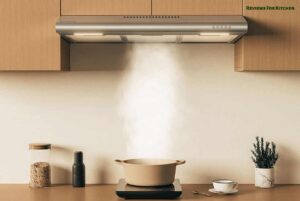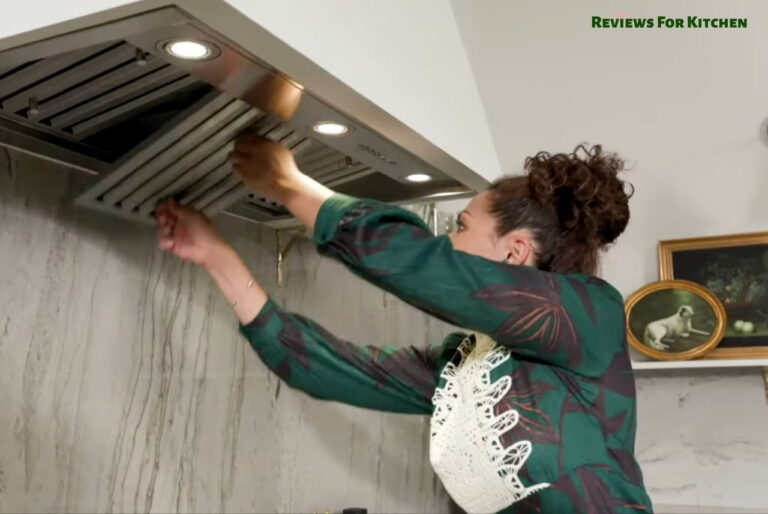
Last year, a friend called me frustrated about her range hood. It had basically stopped working — smoke just drifted around the kitchen instead of getting pulled up. She thought the motor was dying. Turned out the filters hadn’t been cleaned in roughly three years. Three. Years. One 30-minute soak in hot soapy water later, the hood was working like the day it was installed.
So — how often should you clean range hood filters? The answer genuinely depends on your filter type and how much you cook, but most households should be cleaning every 3 to 4 weeks. Leave it much longer than that and you’re not just dealing with a dirty hood — you’re dealing with reduced airflow, lingering cooking smells, and a grease buildup that’s considered a legitimate fire hazard by fire safety organizations.
This guide covers the exact cleaning frequency for every filter type, how to adjust the schedule based on how you actually cook, and the telltale signs that tell you the filter needs attention right now. For a full walkthrough on the complete maintenance picture, our guide on how to maintain range hood filters covers the broader routine from top to bottom.
⚡ Key Takeaways
- Most households: clean grease filters every 3–4 weeks
- Heavy cooks (frying, stir-frying): every 2 weeks
- Light cooks (salads, sandwiches): every 6–8 weeks
- Charcoal/carbon filters: replace every 3–6 months — they cannot be washed
- Baffle filters are the easiest to clean and the most forgiving on schedule
- Visible grease buildup and weaker suction are your two clearest warning signs
Why the Cleaning Schedule Matters More Than You Think
Here’s the thing most people don’t realize: a range hood filter doesn’t just get dirty. It gradually stops doing its job — and the decline is so slow that it’s easy to miss until the problem is significant.
Grease filters work by physically trapping grease particles from cooking vapor before that vapor passes through to the ductwork or the recirculation fan. Every time you cook, a thin layer of grease coats the filter surface. Cook with high heat or lots of oil and that layer builds faster. Over weeks without cleaning, the mesh or baffle channels fill up, airflow drops, and the hood has to work harder to pull the same amount of air. Eventually it can barely pull any air at all — which is exactly what happened with my friend’s hood.
What actually happens to ignored filters
According to The Kitchn’s guide on range hood filter cleaning, grease buildup in exhaust filters is one of the most commonly overlooked kitchen fire risks in home cooking. When grease saturates a filter completely, a few things happen. The filter stops catching new grease, so it passes directly into the ductwork instead. More immediately, saturated grease in a filter that sits near a hot burner can ignite. That’s not a theoretical risk — it’s the reason commercial kitchens have strict filter cleaning regulations written into health codes.
Beyond fire safety, the performance impact is real and measurable. A fully clogged grease filter can reduce your hood’s effective CFM (cubic feet per minute of airflow) by 50% or more. That means smoke, steam, and cooking odors that should be captured are instead drifting into your kitchen — which explains why so many people assume their hood is broken when the motor is actually fine.
The performance drop you may already be noticing
Slower-than-usual smoke clearance is the earliest sign. If smoke from searing a steak lingers for several minutes after you’ve turned the hood to full power, the filter is restricting airflow. Condensation forming on cabinet doors near the cooktop is another early signal — moist cooking vapor isn’t being captured the way it should be. Both of these are fixable with a cleaning session, not a new hood.
How Often to Clean Range Hood Filters — By Filter Type
Not all filters work the same way, and the cleaning schedule isn’t identical across types. Getting this wrong is surprisingly common — a lot of people hand-wash their charcoal filters without realizing it does nothing, because charcoal filters can’t be cleaned at all.
Baffle Filter
Every 3–4 Weeks
Stainless steel. Most durable and easiest to clean. Dishwasher-safe on most models. Ideal for heavy cooks.
Mesh / Aluminum Filter
Every 2–4 Weeks
Most common in mid-range hoods. Hand-wash only — dishwasher heat can warp the frame. Clogs faster than baffle.
Charcoal / Carbon Filter
Replace Every 3–6 Months
Cannot be washed. Found in ductless/recirculating hoods only. Replace on schedule — cleaning does nothing.
Baffle filters — the forgiving ones
Baffle filters are made from stainless steel with a series of angled baffles — channels that force air to change direction, causing grease to separate and drip into a collection channel. Because the grease drains rather than fully clogging the filter, they’re more forgiving of an overdue cleaning. That said, “forgiving” doesn’t mean indefinite. Once the grease collection channel fills up, the drip mechanism stops working and grease starts building on the baffle surfaces. Clean every 3 to 4 weeks for normal cooking, or every 2 weeks if you cook at high heat regularly.
Most baffle filters are dishwasher-safe — check your hood’s manual to confirm, but stainless steel construction generally handles it fine. Run them through a hot cycle and they come out looking close to new. That’s one reason professional kitchens and serious home cooks tend to prefer baffle filters over mesh.
Mesh and aluminum filters — the most common type
Standard mesh or aluminum grease filters are what you’ll find in the majority of under-cabinet and wall-mount range hoods in the $150–$400 price range. Multiple layers of fine aluminum mesh trap grease as air passes through. The downside is that grease doesn’t drain — it accumulates in those mesh layers — so they clog faster than baffle filters and need more frequent attention.
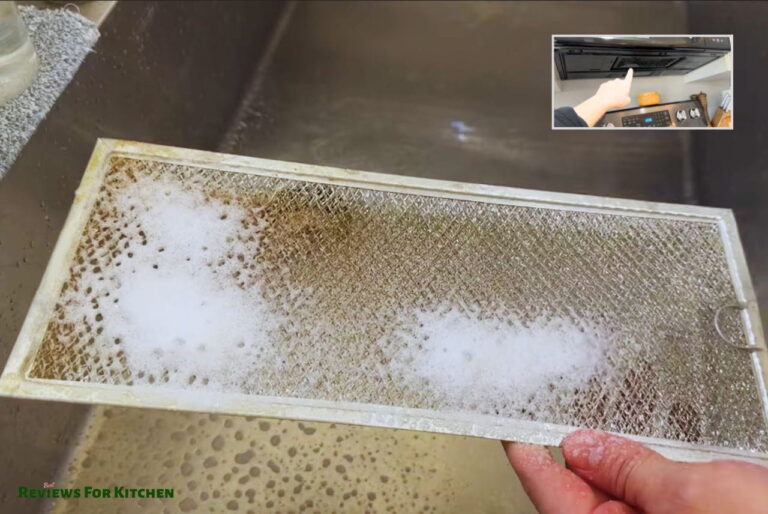
Every 2 to 3 weeks is the right rhythm for anyone who cooks most nights. Lighter cooks can stretch to 4 weeks. Avoid the dishwasher with aluminum mesh — the heat and detergent can cause discoloration and warping. Hot water, dish soap, and baking soda in the sink works better and keeps the filter in shape longer. Our full step-by-step for this is in our guide on how to clean a range hood mesh filter.
Charcoal and carbon filters — replace, don’t wash
Charcoal filters are found only in ductless or recirculating range hoods — the kind that don’t vent air outside, but filter and recirculate it back into the kitchen. These filters work through activated carbon, which absorbs grease odors and smoke particles through adsorption rather than physical trapping. Once the carbon is saturated, it stops absorbing anything new.
Washing them does nothing useful. Running water through a saturated carbon filter just gets it wet — it doesn’t regenerate the adsorption capacity. Replace charcoal filters every 3 to 6 months, or according to your hood manufacturer’s guidance (many specify replacement after 120 hours of actual use rather than calendar time). If cooking smells are starting to linger noticeably after you’ve used the hood, that’s usually the clearest sign the charcoal filter is spent.
How Your Cooking Style Changes the Schedule
Two households can have identical range hoods and need completely different cleaning schedules. The reason is simple: cooking style affects how much grease and vapor a filter has to handle, and some cooking methods produce dramatically more than others.
Light cooking — salads, sandwiches, and simple pasta
If most of your cooking happens below medium heat — reheating, boiling pasta, making salads or sandwiches — grease buildup happens slowly. There isn’t much airborne grease vapor from simmering a pot of water or assembling a cold meal. For these households, cleaning the grease filter every 6 to 8 weeks is usually sufficient.
That said, even light cooks should set a calendar reminder rather than rely on visual inspection alone. Grease buildup on fine mesh isn’t always obvious until it’s severe. A quick monthly glance at the filter — holding it up to a light — catches slow buildup before it becomes a problem.
Heavy cooking — frying, stir-frying, and high-heat searing
Deep frying, wok cooking, and high-heat searing generate significantly more airborne grease than any other cooking method. Serious Eats explains the science behind cooking vapor — at high temperatures, fat aerosolizes into tiny particles that travel far from the pan. A filter catching all of that on a weekly basis will saturate quickly.
For heavy cooks, a 2-week cleaning schedule is more realistic than the standard 4-week recommendation. Some dedicated stir-fry cooks clean their filters weekly, especially during periods of frequent high-heat cooking. It sounds like a lot, but a 20-minute soak requires almost no active effort — most of the cleaning happens while you do something else.
Somewhere in the middle — most households
The reality for most households is a mix: a few cooked meals per week, occasionally with higher heat, occasionally just reheating. Every 3 to 4 weeks is the right baseline for this profile. If you’ve been going longer than that without cleaning, you’re not alone — most people dramatically underestimate how quickly grease builds up when cooking happens several times a week.
How to Tell Your Filter Needs Cleaning Right Now
No schedule survives real life perfectly. Cooking patterns change, you travel for two weeks, life gets busy. Rather than stressing about an exact interval, knowing the warning signs lets you catch an overdue filter before performance gets bad.
The visual test — fastest check you can do
Remove the filter and hold it up to a bright light source — window light works well. A clean filter lets light pass through relatively easily. A filter that needs cleaning will have visibly greasy, darkened mesh with significantly reduced light coming through. A filter that’s completely overdue will be practically opaque — grease filling every cell of the mesh.
On baffle filters, look into the collection channels at the base. If those are filled with accumulated grease rather than mostly empty, the filter is overdue for cleaning. The channels should be empty after each cleaning — grease sitting in them means the drain mechanism isn’t working properly anymore.
The performance test — what you notice while cooking
Cooking smells that linger noticeably longer than usual after you’ve turned the hood on full power are the most consistent real-world indicator. Visible smoke that rises toward the hood but doesn’t get captured is another. Condensation on nearby cabinet doors — especially on humid days — suggests that moisture-laden cooking vapor is escaping rather than being pulled up. Any of these, combined with a filter that hasn’t been cleaned in a while, means the issue is almost certainly the filter rather than the motor or ductwork.
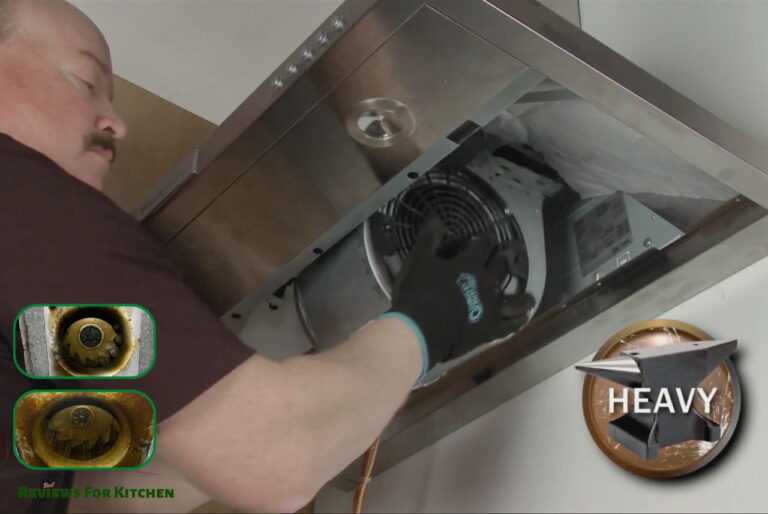
If you’ve cleaned the filter and performance still feels weak, the next step is to check the fan motor. Our guide on how to clean a range hood fan motor walks through that process — accumulated grease on the motor blades reduces airflow even when the filter itself is clean.
Quick reference: range hood filter cleaning schedule
| Filter Type / Cooking Style | Recommended Frequency | Notes |
|---|---|---|
| Mesh/aluminum — heavy cook | Every 2 weeks | Frying, wok, high-heat searing weekly |
| Mesh/aluminum — average cook | Every 3–4 weeks | Cooking most nights, mixed heat levels |
| Mesh/aluminum — light cook | Every 6–8 weeks | Mostly low heat, occasional full meals |
| Baffle (stainless) — heavy cook | Every 2–3 weeks | Drain channel fills faster with high-grease cooking |
| Baffle (stainless) — average cook | Every 3–4 weeks | Dishwasher-safe on most models — easiest to maintain |
| Charcoal/carbon (ductless hood) | Replace every 3–6 months | Cannot be washed — replace only. Use 120-hr runtime as guide. |
A Simple Cleaning Routine That Actually Sticks
Knowing the schedule is one thing. Actually sticking to it is another. The main reason people fall behind on range hood filter cleaning isn’t laziness — it’s that there’s no trigger for it. Unlike a smoke alarm battery that beeps, a clogged filter gives quiet, gradual signals that are easy to ignore.
How to build the habit
Tying filter cleaning to something you already do consistently works better than relying on a calendar reminder most people dismiss. The first weekend of every month, while the dishwasher is running after dinner, is when I deal with the filter. The soaking takes 20 to 30 minutes, it runs simultaneously with something else, and it never takes more than a few minutes of actual hands-on time.
Setting a recurring phone reminder that says “Range hood filter” on the first of each month works surprisingly well too. It takes 10 seconds to set and prevents the filter from going untouched for months without you realizing it.
Monthly tasks — 20 minutes, mostly passive
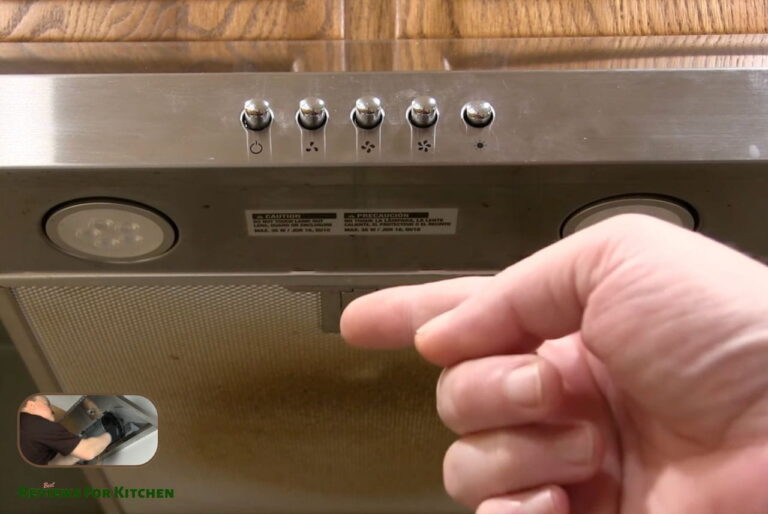
- Remove the grease filter (usually slides out or unlatches with a push tab)
- Fill the sink with the hottest water your tap produces, plus a generous squirt of dish soap and ¼ cup of baking soda
- Submerge the filter and leave it for 20 to 30 minutes — most grease loosens on its own
- Scrub any remaining spots with a soft brush or old toothbrush — avoid stiff wire brushes on aluminum mesh
- Rinse thoroughly with hot water and let it air dry completely before reinstalling
- Wipe the interior hood surface and the area around the filter housing with a damp cloth while the filter is out
According to testing done by America’s Test Kitchen on range hood maintenance methods, the baking soda and hot water combination outperforms commercial degreasers for standard mesh filter cleaning in most cases — and doesn’t leave chemical residue that could affect air quality during cooking.
Quarterly and annual tasks
Every three months, it’s worth pulling out the range hood exhaust fan and giving the fan blades a wipe. Grease travels past even a working filter in small amounts and gradually coats the blades, reducing airflow over time. Our full process for this is covered in the guide on how to clean a kitchen exhaust fan — it’s not complicated, but it does require a few extra steps beyond the filter itself.
Once a year, check the ductwork if you have a ducted hood. Grease can accumulate in the duct over time, particularly in the bends closest to the hood. If you notice a persistent burning smell even with a clean filter, the duct may need attention. Our post on how to clean a range hood duct covers this in detail. For most households that clean their filter consistently, duct cleaning is needed infrequently — maybe every two to three years. Heavy cooks who fry often may need to check it annually.
Frequently Asked Questions
For most households, once a month is the right rhythm. Heavy cooks who fry or use a wok frequently should clean every 2 weeks. Light cooks who mostly use low heat can stretch to every 6 to 8 weeks. Charcoal filters in ductless hoods are the exception — those need replacing every 3 to 6 months, not washing.
Grease builds up until the filter becomes nearly solid, reducing airflow by 50% or more. Cooking smells linger longer, smoke doesn’t get captured, and the accumulated grease becomes a genuine fire hazard near an open flame. In severe cases, saturated grease can drip back onto the cooktop during high-heat cooking.
Stainless steel baffle filters are generally dishwasher-safe — check your manual to confirm. Standard aluminum mesh filters can warp or discolor in the dishwasher’s heat cycles. When in doubt, hand-wash in hot water with dish soap and baking soda. The soak method works better than any dishwasher cycle for heavy grease anyway.
Hold the filter up to a light source. A clean filter lets light through easily; a dirty one looks dark and opaque. Performance signs include cooking smells that linger after the hood is running at full power, visible smoke that doesn’t get pulled up, and condensation forming on nearby cabinet surfaces.
No — charcoal filters work through activated carbon absorption and cannot be washed or regenerated. Washing them with water does nothing to restore their effectiveness. Replace them every 3 to 6 months, or roughly every 120 hours of hood use. If cooking smells are lingering despite a clean grease filter, the charcoal filter is likely spent.
A few possibilities: the charcoal filter (if your hood has one) needs replacing, not cleaning; grease has built up on the fan motor blades behind the filter; or the ductwork itself has grease accumulation. Try cleaning the fan motor next — our guide on cleaning a range hood fan motor walks through the process step by step.
Final Verdict
Most households should clean their range hood grease filters once a month. Heavy cooks go every 2 weeks. Light cooks can stretch to every 6 weeks. Charcoal filters get replaced, not washed — every 3 to 6 months.
More important than the exact number is having any schedule at all. A filter that gets cleaned regularly every 5 weeks beats one that gets cleaned thoroughly every 6 months but ignored in between. The goal is consistency, not perfection.
If you noticed weaker suction or lingering smells after your last clean, it’s worth checking the fan motor and ductwork next. Our post on how to increase suction power in your range hood covers the full diagnostic — often the fix is simpler than it looks.
How often do you actually clean yours? If you’ve found a trick that makes it easier to stay on schedule, drop it in the comments — I’d genuinely love to know what works for people.
People also search for
- How to Clean Range Hood Mesh Filter | A Step-by-Step Guide
- How to Maintain Range Hood Filters for a Cleaner Kitchen?
- How to Clean Range Hood Duct | Easy Steps for a Spotless Kitchen
- How to Clean Kitchen Exhaust Fan
- How to Increase Suction Power in Your Range Hood
- 5 Best Vented Range Hood for Your Healthy Kitchen