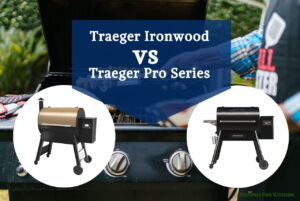
A while back, my buddy called me from a Home Depot parking lot, genuinely stuck between two Traegers sitting on the sales floor. He’d been researching for weeks — videos, forums, Reddit threads — and still couldn’t figure out the difference. “They both have WiFIRE. They both do 6-in-1. What’s actually different?”
Sound familiar? The Traeger Ironwood vs Pro decision trips up a lot of people, and honestly it makes sense why. The two series share the same app, the same pellet system, and a very similar look. But once you dig past the branding, the differences are real — and they matter depending on how you cook.
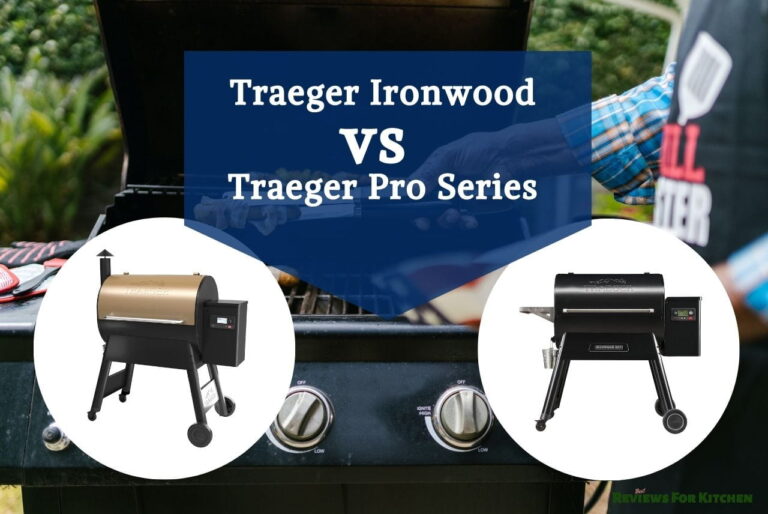
This is the guide I wish existed when I was deciding. It covers every cross-series matchup — Ironwood 650 vs Pro 575, Ironwood 885 vs Pro 780, and the tricky Pro 780 vs Ironwood 650 comparison — so you can pick the right grill the first time without second-guessing yourself for weeks.
Quick Summary: Key Takeaways Before You Read On
- The Pro series is a reliable, capable pellet grill at a lower price point — great for beginners and everyday backyard cooks.
- The Ironwood series adds three real upgrades over the Pro: Super Smoke mode, a downdraft exhaust system, and double-wall insulation.
- If smoke flavor is your top priority, the Ironwood wins — its downdraft exhaust keeps smoke in contact with your food longer.
- If you grill in cold weather year-round (northern U.S., Canada), the Ironwood’s double-wall construction is a genuine advantage.
- The Pro is not a budget grill — it just has fewer features. For most casual weekend grillers, the Pro 780 is more than enough.
- Already decided on the Pro? See our full Traeger Pro 575 vs 780 breakdown to pick the right size.
The Models at a Glance: What You’re Actually Comparing
Before the head-to-head matchups, here’s a straight comparison of all four models. Traeger names their grills by cooking area — the 575 means 575 square inches, the 780 means 780 — so the names are actually useful once you know that.
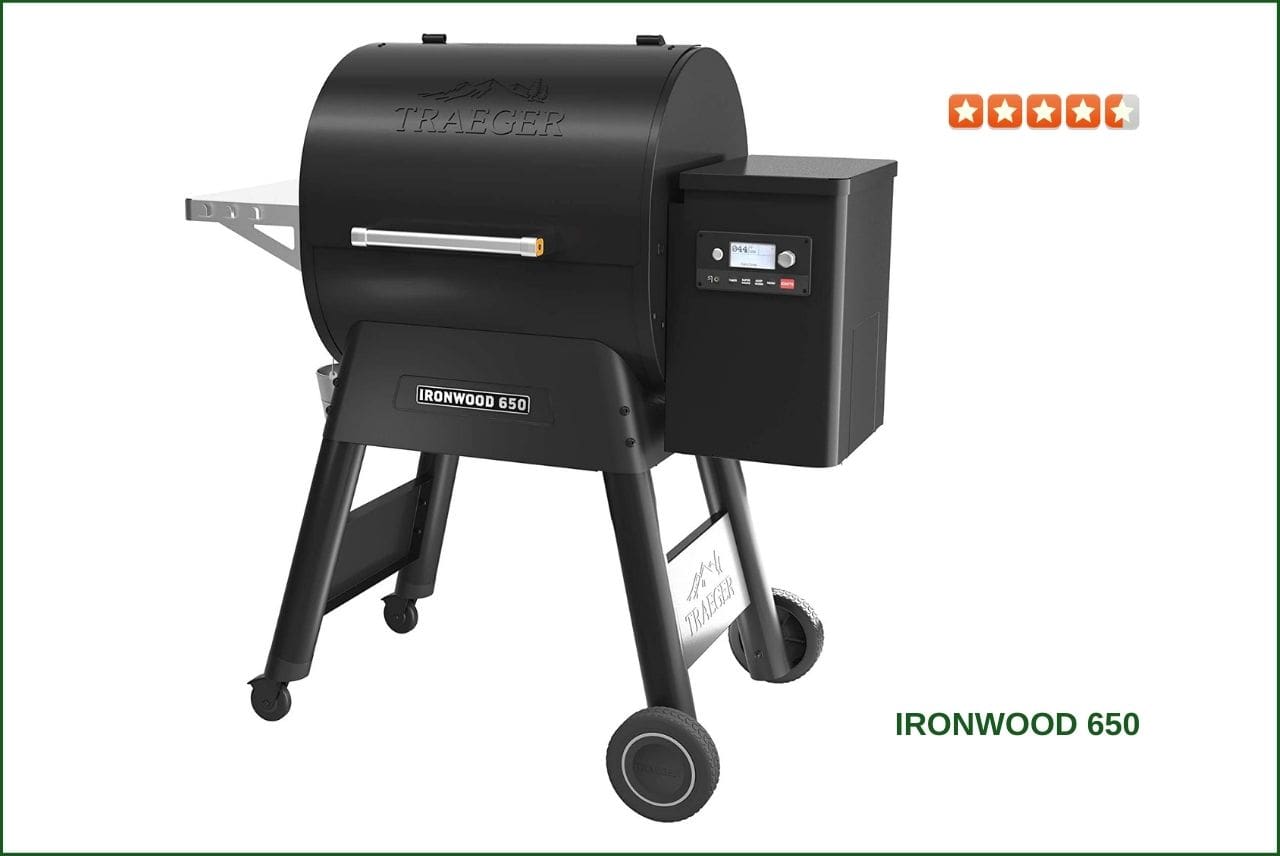
| Features | Traeger Ironwood 650 | Traeger Ironwood 885 | Traeger Pro 575 | Traeger Pro 780 |
|---|---|---|---|---|
 | | | |
|
| Cooking space | 1. 418 square inches main rack 2. 231 square inches top rack 3. 650 square inches total space | 1. 570 square inches main rack 2. 315 square inches top rack 3. 885 square inches total space | 1. 418 square inches main rack 2. 154 square inches top rack 3. 575 square inches total space | 1. 570 square inches main rack 2. 210 square inches top rack 3. 780 square inches total space |
| Power source | Wood pellet, and charcoal | Wood Pellet | Wood Pellet | Wood Pellet |
| Cooking versatility | Grill, Smoke, Bake, Braise, Roast, and BBQ | Grill, Smoke, Bake, Braise, Roast, and BBQ | Grill, Smoke, Bake, Braise, Roast, and BBQ | Grill, Smoke, Bake, Braise, Roast, and BBQ |
| Temperature range | Max 500°F or 260°C Min 180° F or 82° C | Max 500°F or 260°C Min 180° F or 82° C | Max 500°F or 260°C Min 180° F or 82° C | Max 500°F or 260°C Min 180° F or 82° C |
| Hopper capacity | 20 pounds | 20 pounds | 18 pounds | 18 pounds |
| Dymension | 47x46x27 inches | 47x54x27 inches | 27 x 41 x 53 inches | 55x49x27 inches |
| Weight | 149 Pounds | 175 Pounds | 124 Pounds | 173 Pounds |
| WiFIRE technology | Included | Included | Included | Included |
| Controlling system | WiFIRE Controller | WiFIRE Controller | WiFIRE Controller | WiFIRE Controller |
| Barrel Size | 22 inches | 30 inches | 22 inches | 22 inches |
| Wood smoke | Yes | Yes | Yes | Yes |
| Portability | Average Portable | Least Portable | Most Portable | Least Portable |
| Foods that fits & Feeding people | 8 chickens or 5 rib racks pr 6 beef butts Average 15-20 | 10 chickens or 7 rib racks or 9 beef butts Average 25-30 | 4 chickens or 5 rib racks or 24 burgers Average 10-15 | 6 chickens or 6 rib racks or 34 burger or Average 20-25 |
| Meat Probe | Single | Single | Single | Single |
| Grates | Adjustable two-tier | Adjustable two-tier | Adjustable two-tier | Adjustable two-tier |
| D2 Direct Drive | Included | Included | Included | Included |
| TRU Convection | Included | Included | Included | Included |
| Price | Relatively cheap | Most Expensive | Most Pocket friendly | Relatively affordable |
| Price on Amazon | Check Price | Check Price | Check Price | Check Price |
| Price on Website | Check Price | Check Price | Check Price | Check Price |
Here’s what jumps out immediately: the Ironwood 650 costs roughly $300 more than the Pro 780 — but actually has less cooking space. That tells you exactly what Traeger is charging for. It’s not the size. It’s those three features: Super Smoke, the downdraft exhaust, and double-wall construction. Whether they’re worth the extra money to you depends entirely on how you cook.
What the Ironwood Has That the Pro Doesn’t: The 3 Real Differences
Let me be real with you — Traeger’s marketing makes it easy to lose track of what’s a genuine upgrade and what’s just a buzzword. Here’s what actually separates the Ironwood from the Pro, and why each one matters.
1. Super Smoke Mode
Super Smoke mode slows down the auger fan to produce a thicker, denser smoke at low temperatures — specifically between 165°F and 225°F. The reason that temperature range matters is that meat absorbs smoke most efficiently during the early phase of a cook, before the surface temperature rises above 140°F. According to food scientists at Serious Eats, smoke uptake drops significantly once the meat’s exterior starts to crust over — which is exactly why front-loading smoke early makes a real difference.
The Pro series doesn’t have this. It runs a fixed fan speed throughout the cook. You can absolutely get great results on a Pro — plenty of serious pitmasters run Pro 780s for competition-level briskets — but the Ironwood’s Super Smoke mode gives you a head start on smoke flavor without any extra effort on your part.
2. Downdraft Exhaust System
This one is underrated and honestly might be the more important feature of the two. On a standard pellet grill — including every model in the Pro series — smoke exits through a chimney at the back of the lid. It drifts across the top of the cooking chamber and vents out quickly. It flavors the food, but the contact time is limited.
Traeger’s downdraft system pulls smoke downward through the chamber before it exits from vents at the bottom. Instead of floating over your food and out, the smoke is drawn past and around the food before it escapes. More contact time means more smoke flavor — it’s as simple as that.
For a quick weeknight chicken breast? You probably won’t notice the difference. For a 14-hour brisket or a full pork shoulder? You will. If you’re curious how that plays out in practice, our guide to smoking brisket at 250 vs 225 goes into how temperature and time affect smoke penetration on long cooks.
3. Double-Wall Construction and Insulation
The Ironwood’s body uses double-wall steel — an inner and outer shell with a gap between them that acts as insulation. Two things this actually does for you in the real world:
- Temperature consistency in cold weather. A single-wall grill loses heat fast when it’s cold outside. If you’re in Minnesota, Alberta, or anywhere that sees real winters and you plan to grill year-round, a single-wall pellet grill can burn 30–40% more pellets just to hold 225°F on a cold morning. The Ironwood holds that temperature far more efficiently.
- Cooler outer surface during a cook. Double-wall construction keeps the exterior of the grill cooler to the touch — a genuine safety benefit if you’ve got kids or dogs that wander near the grill.
The Pro series is single-wall. It works well in most U.S. climates. But if you grill through winter in the northern half of the country or in Canada, the insulation difference adds up.
Head-to-Head Matchups: Every Cross-Series Comparison
Ironwood 650 vs Pro 575 — Entry-Level Cross-Series
These are the entry points for each series, and the price gap is the steepest in the lineup. You’re paying roughly $500 more for the Ironwood 650 than the Pro 575 — and you’re getting less cooking space (650 sq in vs 572 sq in). So what’s the case for the Ironwood 650 here?
Buy the Pro 575 if: This is your first pellet grill and you want to learn the format before committing to a higher price point. The Pro 575 does everything a pellet grill should do — it grills, smokes, roasts, and the WiFIRE app works great. At $800, it’s not a cheap grill. It just doesn’t have the premium features. For most first-timers, it’s the smarter starting point. Check out our full Traeger 575 vs 780 comparison if you’re trying to decide between the two Pro sizes.
Buy the Ironwood 650 if: You’ve used a pellet grill before and already know you want better smoke character. Or you cook in cold winters. Or you’re buying based on research (which is why you’re reading this), already understand what Super Smoke and the downdraft exhaust do, and want those things. If none of those apply — start with the Pro 575 and upgrade later if you outgrow it.
Ironwood 885 vs Pro 780 — The Most Common Comparison
This is the matchup most people are actually deciding between, and it’s the most balanced comparison in the lineup. The Ironwood 885 and Pro 780 are similarly sized, and the price difference here is about $500. Here’s how to think about it.
The Pro 780 is genuinely a lot of grill. 780 square inches handles a full packer brisket, 4–5 racks of ribs, or a whole spatchcocked bird comfortably. For a family of 4–6, you’ll rarely feel cramped. The temperature holds steady in mild conditions, the WiFIRE app works reliably, and the results are consistently good. This is not a grill you’ll outgrow quickly.
The Ironwood 885 gives you all three series upgrades plus a bit more room. If you cook low-and-slow regularly, care about smoke rings and bark development, host large cookouts, or want the better long-term investment, the Ironwood 885 earns its price. When you’re doing a 12-hour pork shoulder, that downdraft exhaust and Super Smoke mode are working for you the whole time. For a closer look at the Ironwood size decision, our Traeger Ironwood 650 vs 885 guide walks through that in detail.
Honest take: about 70% of buyers in this price range would be completely satisfied with the Pro 780 and never feel like they were missing something. The other 30% — the ones who care deeply about smoke flavor, cook competition-style, or grill in cold climates — should stretch for the Ironwood 885. Figure out which group you’re in before you decide.
Pro 780 vs Ironwood 650 — The Trickiest Comparison
This one trips people up the most, because the numbers seem to favor the Pro: the Pro 780 has 130 more square inches but costs about $300 less than the Ironwood 650. So is the Ironwood 650 a bad deal?
Not exactly. You’re making a deliberate trade. With the Pro 780, you’re buying more space at a lower price. With the Ironwood 650, you’re buying Ironwood-level smoke performance in a more compact footprint.
If cooking area is your main concern — you regularly cook for 8 or more people — the Pro 780 wins this comparison without much debate. But if you’re cooking for a family of 2–4 and what you actually care about is smoke quality, the Ironwood 650 makes sense despite the smaller size. I’ve cooked a full brisket, two racks of ribs, and a batch of jalapeño poppers simultaneously on a 650-class grill without running out of room. Cooking area matters less than people think until you actually run out of it.
Who Should Buy Which Traeger: The Simple Decision Guide
Four honest questions. Answer these before you click “add to cart.”
Buy the Pro Series If…
- This is your first pellet grill and you want to learn the format before spending more
- Your budget tops out at $800–$1,000
- You mostly grill — steaks, burgers, chicken — with occasional smoking
- You live in a mild climate and don’t grill through freezing winters
- Cooking area per dollar is your main priority (the Pro 780 wins this hands-down)
Buy the Ironwood If…
- Smoke flavor genuinely matters to you — you care about smoke rings, bark, and depth
- You cook brisket, pork shoulder, or ribs regularly (long cooks are where the downdraft shines)
- You live somewhere cold and grill year-round — the double-wall insulation pays off in winter
- You’re upgrading from another grill and already know what you want
- You want the best Traeger under the Timberline tier and budget isn’t the deciding factor
Already decided on the Ironwood and wondering about accessories? Our roundup of the best controllers for Traeger is worth a look — a quality aftermarket controller extends the life of your grill significantly and gives you better temperature precision.
Common Mistakes People Make Choosing Between These Two
Thinking the Pro Is a Budget Grill
It isn’t. The Pro series is Traeger’s standard line. At $800–$1,000, it’s not a cheap grill — it’s just not the premium line. People come into this comparison expecting the Pro to look and feel noticeably cheaper in person, and they’re usually surprised. Don’t dismiss it just because it’s the entry point. The build quality is solid and the results are genuinely good.
Choosing Based on Cooking Area Alone
The Ironwood 650 loses people to the Pro 780 all the time purely because of the number in the model name. But unless you’re regularly cooking for 8+ people, 650 square inches is plenty. Think about how many people you actually feed on a typical cook before you let the number make your decision for you. Also worth thinking about: how to choose the right grill size for your outdoor space covers this in more detail if you’re unsure.
Ignoring the Weather Factor
If you’re in Wisconsin, Michigan, Alberta, or anywhere else that sees real winters — and you plan to grill year-round — the Ironwood’s double-wall insulation is not a gimmick. A single-wall pellet grill burns noticeably more pellets to hold temperature on cold days. Factor that into your real cost of ownership over a few years.
Not Thinking Long-Term
A pellet grill is a 10–15 year purchase if you take care of it. The Ironwood’s features are not just nice extras today — they’re the things you’ll care more and more about as you get better at BBQ. A lot of Pro owners end up wishing they’d stretched for an Ironwood once they get serious about low-and-slow. If that sounds like where you’re headed, buy it once.
Pellets, Temperature, and What to Cook First
Whichever grill you choose, the pellet you use matters more than most people expect. Both the Pro and Ironwood run on any standard wood pellet — you’re not locked into Traeger brand. Competition blends, hickory, cherry, apple, and pecan all behave slightly differently, especially in the Ironwood where Super Smoke mode amplifies whatever wood you’re burning.
For your first serious smoke, I’d actually recommend a pork shoulder or St. Louis ribs rather than jumping straight into brisket. Both are more forgiving and will teach you how your specific grill holds temperature before you commit 12+ hours to a brisket. Once you’re ready for that, our guide on smoking brisket at 250 vs 225 breaks down exactly how to approach your first long cook.
Also — if you’re switching to a pellet grill from an offset or charcoal setup, the flavor profile will be different. Not worse. Different. The smoke is cleaner, the temperature is more consistent, and the results are more repeatable. Our full pellet vs offset smoker comparison covers what to expect if you’re making that switch.
Frequently Asked Questions
Is the Traeger Ironwood really worth the extra money over the Pro?
For most casual grillers, the Pro 780 is more than enough and the extra cost isn’t justified. But if you cook low-and-slow regularly, care deeply about smoke flavor, or live somewhere with cold winters, the Ironwood’s three upgrades — Super Smoke, downdraft exhaust, double-wall insulation — genuinely earn the price gap. It depends on how you cook.
Can you get a good smoke ring on a Traeger Pro?
Yes, absolutely. A smoke ring is mostly a chemical reaction between nitrogen dioxide in the smoke and myoglobin in the meat — it has more to do with temperature, time, and wood type than the specific grill. Plenty of serious pitmasters achieve great smoke rings on a Pro 780. The Ironwood’s Super Smoke mode helps, but it’s not the only way to get there.
What is Super Smoke mode and does it actually work?
Super Smoke reduces the fan speed inside the grill to produce denser smoke at low temperatures (165°F–225°F). Yes, it works — most Ironwood owners report noticeably more smoke flavor compared to standard mode, especially on long cooks like brisket and pork shoulder. It’s most effective during the first few hours when the meat absorbs smoke most efficiently.
How much does cold weather affect a Traeger pellet grill?
More than people realize. Single-wall grills (Pro series) lose heat faster in cold temperatures and have to burn more pellets to maintain cooking temperature. In sub-freezing conditions this can mean 30–40% more pellet consumption per cook. The Ironwood’s double-wall construction reduces this significantly. If you grill through winter in a cold climate, it’s a real practical advantage.
Can I use non-Traeger pellets in a Traeger grill?
Yes, and many Traeger owners do. Traeger’s warranty doesn’t require their brand of pellets. Competition blends from brands like Lumberjack, Bear Mountain, and CookinPellets are popular alternatives. The only rule: use food-grade hardwood pellets with no added oils, flavors, or softwood filler. If you have a Pit Boss and wonder about compatibility, we covered that too — see our post on whether you can use Traeger pellets in a Pit Boss.
Is the Traeger Pro 780 or Ironwood 650 the better value?
It depends what you value. The Pro 780 gives you more cooking space for less money — it’s better value if size matters most. The Ironwood 650 gives you better smoke performance in a smaller footprint — it’s better value if flavor quality is your priority. Neither is objectively “better.” Pick based on what you actually cook and how many people you feed.
Final Verdict: Traeger Ironwood vs Pro
Here’s where I land after all of it. Both series are genuinely good pellet grills — Traeger doesn’t make a weak product at this price point. The question is just which feature set fits your cooking life.
Go with the Pro series — especially the Pro 780 — if you’re new to pellet grilling, cooking for a smaller group, working within a budget, or mostly grilling rather than long-smoking. You’re not settling. You’re making a smart, practical call that will serve you well for years.
Go with the Ironwood if you cook low-and-slow regularly, smoke flavor genuinely matters to you, you grill through cold winters, or you’re upgrading from another setup and know what you want. The Ironwood’s three upgrades together make a real difference on a 12-hour brisket. And if you already know you’re the kind of cook who’ll appreciate them — buy it once and be happy.
If you’re still weighing other brands alongside Traeger, our Rec Tec vs Traeger comparison is worth reading before you decide. And once your grill is set up, the single best upgrade you can make is a quality temperature controller — our picks for the best controllers for Traeger are a good place to start.
Now go fire it up. You’ve done enough research.
People also search for
- The Ultimate Smoker Buying Guide : Types, Tips & Best Picks for Every Backyard
- Traeger Pro Series 575 vs 780 | Which Grill Should You Choose?
- Traeger Ironwood 650 vs 885 | Which Is Better And Worth The Investment
- Best 6 BBQ Temperature Controllers That Actually Work
- Best Kamado Temperature Controller | Latest Thermometers