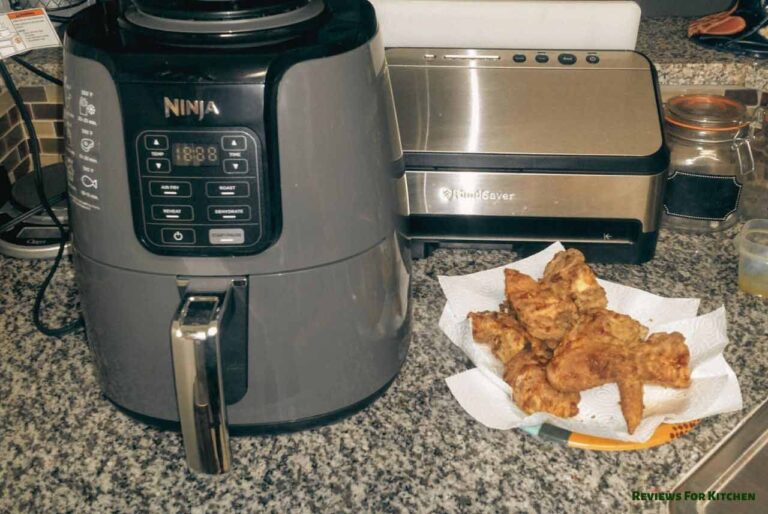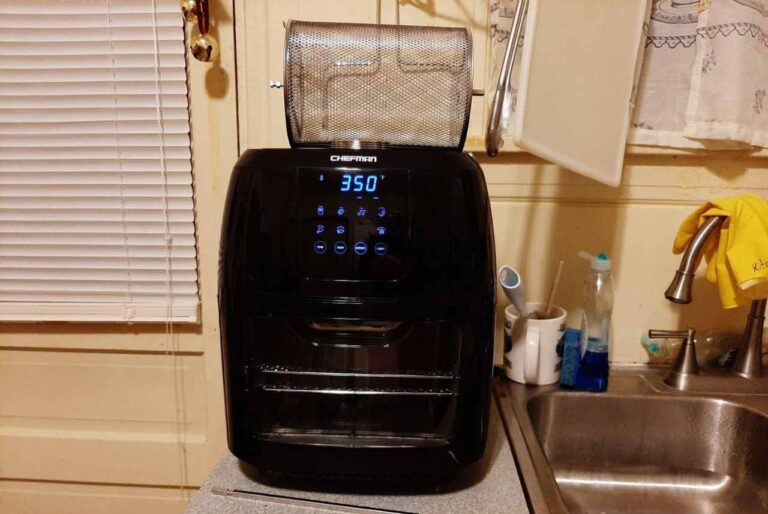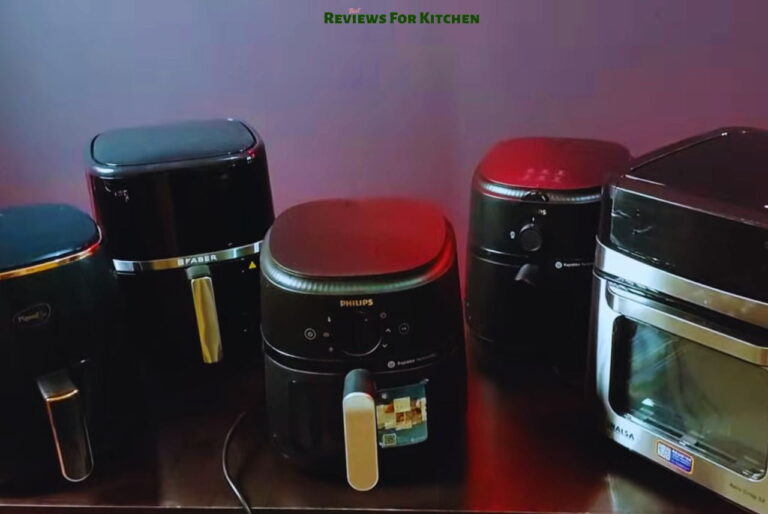
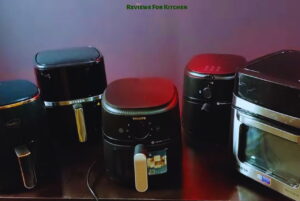
I used to be the person who bought the air fryer everyone was talking about, used it twice, and quietly pushed it to the back of the cabinet. Not because it was bad. Because I had no idea what I was actually doing with it — or what I should have bought in the first place.
Sound familiar? You’re not alone. Air fryers have gone from a niche gadget to one of the most searched kitchen appliances on the planet — and the market is absolutely flooded. Two-drawer models, rotisserie models, toaster oven combos, compact ones for small apartments, enormous ones for large families. Walk into any kitchen store and you can spend twenty minutes staring at a wall of them without getting any closer to a decision.
Here’s the problem with most best air fryer buying guides online: they’re really just product lists pretending to be advice. They’ll tell you “this one has great reviews” and “this one is a bestseller” without ever explaining why that matters for your specific kitchen, your household size, and the foods you actually eat.
This guide is different. We’re walking through the real buying factors — capacity, coating materials, wattage, special functions, and cleaning ease — plus an honest section on safety and a full maintenance guide so your machine stays in good shape for years. By the end, you’ll know exactly which type of best air fryer makes sense for your situation, without second-guessing yourself at checkout.
If you’re completely new to air frying, it also helps to understand a few basics before you buy — our guide on using aluminum foil in an air fryer is a great starting point for understanding how airflow works inside the basket.
Alright. Let’s get into it.
What to Look For: The 5 Things That Actually Make a Difference
Before you get drawn in by preset cooking modes and digital touchscreens, let’s talk about the fundamentals. These five factors are what genuinely determine whether an air fryer is good for your kitchen — or just good-looking on a shelf.
1. Capacity — Get This Wrong and Nothing Else Matters
This is the single most common mistake people make when buying an air fryer. They pick a size that looks reasonable in the store, get it home, and discover it fits about half the food they actually need it to.
Air fryers work by circulating hot air around food. That means you need space between pieces for the air to do its job properly. You can’t cram a full batch of wings into a 3-quart basket and expect crispy results — you’ll get steamed, soggy wings instead. The rule is one layer, with breathing room between pieces. Always.
So the capacity you buy needs to account for that reality, not just the raw quart number on the box. Here’s how it actually breaks down:
- 1–2 people: 2–4 quarts works well. Compact, fast to heat, easy to store. Great for reheating, small portions, or a couple of chicken thighs.
- 3–4 people: 5–6 quarts is the sweet spot for most households. A full pound of wings, a generous batch of fries, or two large chicken breasts in one round without frustration.
- 5+ people or dedicated meal preppers: 7 quarts and above. These are large machines — they take up real counter space — but they save you from doing three or four cooking rounds every dinner.
One more thing: the quart measurement on the box is often the total interior volume, not the usable cooking space. Some brands measure generously. When in doubt, look at the basket dimensions specifically — not just the overall quart rating.
If feeding a large household is your situation, check out our best extra large capacity air fryer roundup — we specifically noted which brands overstate their usable cooking space versus which ones deliver on the number.
2. Basket Material and Coating — The One Factor People Skip That Really Shouldn’t Be Skipped
Almost every air fryer basket has some kind of non-stick coating. That coating is what makes cleanup easy and keeps food from bonding to the metal. But not all coatings are the same, and this is one area where it genuinely pays to understand what you’re buying.
The most common coating is PTFE (polytetrafluoroethylene, widely known as Teflon). PTFE is effective, durable, and has been used in cookware for decades. The concern arises above 500°F, where the coating can begin to break down. For most air fryer cooking (most recipes run between 350–400°F), you won’t hit that threshold during active cooking — but a preheated empty basket at maximum temperature can get close.
America’s Test Kitchen found that ceramic-coated baskets have improved significantly in recent years. Early ceramic models had a reputation for chipping within a year, but newer formulations are genuinely competitive with PTFE in durability and release performance. Stainless steel baskets require a light oil spray before cooking but are the most durable and longest-lasting option by a wide margin — and there’s no coating to worry about at all.
We cover this in full detail in our best non-toxic air fryer guide — including which brands are transparent about their materials and which use vague language that should raise questions.
3. Wattage — More Power Isn’t Always the Answer
Air fryers range from around 1,200 watts on the low end to 1,800 watts on the high end. The marketing message is usually “more watts = faster and crispier.” That’s partially true, but the full picture is more nuanced.
For everyday cooking at standard temperatures — reheating leftovers, frozen fries, chicken breasts, vegetables — 1,500 watts is completely adequate. The performance gap between 1,500 and 1,800 watts at normal cooking temperatures is small enough that most people genuinely wouldn’t notice it in a blind test.
Where wattage becomes important is when it needs to match the basket size. A 7-quart air fryer running at 1,200 watts will struggle to heat a full load of food evenly. The rule of thumb: if you’re buying anything over 6 quarts, look for at least 1,700 watts. Below 6 quarts, 1,500 watts is the comfortable minimum.
Also worth knowing: air fryers are far more energy efficient than conventional ovens regardless of wattage. According to Serious Eats, which has run detailed energy consumption comparisons in their test kitchen, air frying uses roughly 70–80% less energy than a full-size oven for the same cooking task — even a 1,800-watt air fryer running for 20 minutes uses less electricity than a preheated oven for the same job. If keeping energy costs down matters to you, our best energy efficient air fryer guide goes deeper on measured wattage draw versus cooking output across a range of models.
4. Special Functions — What’s Worth Paying For and What Isn’t
The air fryer aisle is full of boxes loaded with bullet points: Bake. Roast. Broil. Toast. Dehydrate. Reheat. Rotisserie. Ferment. Proof. Some models list fifteen or more cooking modes. Almost nobody uses all of them.
Here’s an honest breakdown of which special functions are genuinely useful and which are mostly there to justify a higher price.
Dehydrator function — genuinely worth it if you make homemade jerky, dried fruit, veggie chips, or dog treats. The dehydrate setting runs at a low, steady temperature (usually 95–165°F) for several hours — something a standard air fry setting can’t replicate because it’s designed for high heat and fast cooking. Our best air fryer with dehydrator roundup covers which models maintain accurate temperatures throughout a long session — because some are much better at this than others.
Rack system — genuinely worth it if you cook multiple things simultaneously or do regular batch cooking. A rack lets you stack two layers of food in the same basket at the same time. The best rack systems maintain good airflow on both levels; some don’t, and the bottom layer ends up steaming rather than crisping. We tested airflow distribution at both rack levels in our best air fryers with racks guide.
Rotisserie spit — honestly, a maybe. Whole rotisserie chicken in an air fryer is genuinely impressive the first time. The skin crisps beautifully all the way around. But it’s also a production — setting up the spit, balancing the bird, cleaning the spit after. Most people use this a few times and go back to cooking chicken pieces in the basket. If you regularly roast whole birds, it’s worth having. If you’re thinking “I’d try that sometimes,” it’s probably not worth a $60 premium.
Rotating basket — worth considering for foods that need constant tumbling: fries, nuggets, small vegetables, croutons. The basket rotates during cooking so you don’t need to shake it manually. Convenient, not essential — a standard basket with a shake halfway through achieves roughly the same result.
Everything else (proof, ferment, bake, toast, broil) — these work, but they’re features most people won’t use enough to justify paying extra for. A standard air fryer at the right temperature handles almost all of these tasks anyway.
5. Ease of Cleaning — The Underrated Factor That Determines Whether You Actually Keep Using It
Here’s something nobody tells you in the store: the air fryer you keep using long-term isn’t necessarily the best-performing one you could buy. It’s the one that’s easiest to clean.
If cleaning your air fryer takes ten minutes of scrubbing, you will start avoiding it. It’ll become the appliance you “should use more” but never quite do. Dishwasher-safe baskets are the single most practical feature you can look for. If the basket and drawer both go in the dishwasher, cleanup is a non-event — rinse, load, done.
If a model doesn’t have dishwasher-safe parts, the next question is whether you can wipe the basket clean in under two minutes. Smooth, seamless interior baskets without complicated ridges or dividers are much easier to maintain. Heavily textured baskets collect grease in every crevice and become a real chore after a few high-fat cooking sessions.
One practical trick that makes cleanup significantly easier is using liners correctly — our full guide on using aluminum foil in your air fryer covers what works, what doesn’t, and what to avoid for safety.
Our Top Picks by Category — Find Your Match and Start There
Rather than a generic ranked list, we’ve organized our picks by the buying factor that matters most for each type of cook. Find the category that fits your situation and start there — you’ll narrow down faster and more accurately than scrolling through a top-10 list.
Best for Health-Conscious Cooks: Non-Toxic Coating Models
If avoiding PTFE and PFOA is important to you — whether for health reasons, because you have pet birds, or because you prefer knowing exactly what materials are touching your food — there are genuinely good options that don’t require sacrificing cooking performance.
Ceramic-coated models have improved significantly. The early generation had a reputation for chipping within a year of normal use, but modern formulations are much more durable. Stainless steel baskets last even longer, though they require a light oil spray before cooking.
The brands we trust in this category are transparent about exactly what their baskets are made of. We tested coating durability, heat distribution, and how each model holds up after extended daily use in our best non-toxic air fryer roundup.
Best for Batch Cooking: Rack System Models
If you find yourself doing multiple cooking rounds every night — one batch of fries while you wait to start the chicken — a rack-equipped model can genuinely change how you use your air fryer.
Done well, both rack levels get proper airflow and crisp evenly. Done poorly, the bottom layer steams because the rack blocks air circulation. This variation between models is bigger than most buyers expect. We tested it across several models in our best air fryers with racks guide — a few models that looked great on paper performed poorly in practice.
Best for Large Families: Extra Large Capacity Models
If you’re regularly cooking for five or more people, the difference between a 5-quart and a 7-quart air fryer is the difference between one cooking round and three. That might not sound dramatic until you’re standing at the counter at 6:30pm running a fourth batch.
When in doubt, go one size up. You’ll never regret having more cooking space. You will regret doing multiple rounds for a dinner party.
Check out our best extra large capacity air fryer roundup — we specifically sorted through which models genuinely deliver on their capacity claims versus which ones are doing marketing math with the quart number.
Best for Crispy Results: Chicken Wings and High-Heat Cooking
Not all air fryers crisp food the same way, even at the same temperature setting. The difference is in how efficiently and consistently hot air circulates through the basket — and that varies more between models than most buyers realize.
For chicken wings specifically, the basket shape, the spacing of the heating element, and the fan power all affect the final texture. We tested this head-to-head in our best air fryer for chicken wings guide — with a focus on skin crispiness and how evenly the heat distributed across a full pound of wings.
Are Air Fryers Safe? What You Actually Need to Know
This question comes up constantly, and it deserves a direct, honest answer rather than vague reassurance.
The short version: for most people, in most households, used normally, air fryers are safe. But there are a few specific situations and material questions worth understanding before you buy.
PTFE, PFOA, and Ceramic — The Full Picture
PTFE is stable and safe under normal cooking temperatures (up to around 400–450°F). The concern arises above 500°F, where the coating can begin to degrade. For most air fryer recipes (350–400°F), you won’t hit that threshold during active cooking — but preheating an empty basket at maximum temperature can get close. That’s not a reason to panic, but it is a reason to ventilate the room and avoid running the machine empty at maximum heat.
PFOA is a different compound historically used in PTFE manufacturing. PFOA has been phased out by most major manufacturers and was banned in the US by the EPA as of 2023. When you see “PFOA-free” on a label, that’s now a regulatory baseline — not a special feature. The more meaningful question is whether the coating is also PTFE-free if you want to avoid fluorinated coatings entirely. Which? in the UK has independently tested a wide range of models on exactly this question and is a useful reference for European buyers.
Ceramic coatings contain no PTFE or PFOA and are genuinely non-toxic under normal and high-heat conditions. Modern formulations are significantly more durable than early ceramic air fryer baskets, though they still generally have a shorter lifespan than well-maintained PTFE coatings. A light oil spray before cooking helps prevent sticking.
Stainless steel baskets are the most durable and most straightforward safety-wise — there’s no coating at all to worry about. They require more prep to prevent sticking, but they’ll outlast any coated basket by years.
The Bird Safety Issue — Important If You Have Pet Birds
This one is serious and worth its own section. If you have pet birds — parrots, cockatiels, canaries, finches — PTFE-coated cookware is a genuine hazard. Birds have extremely sensitive respiratory systems, and the fumes released when PTFE overheats are toxic to birds even at concentrations that are harmless to humans. This is well-documented and has caused bird deaths from overheated non-stick pans in home kitchens.
If you have pet birds: buy a ceramic-coated or stainless steel air fryer. Full stop. Don’t use PTFE in a kitchen where birds live, regardless of how careful you plan to be.
Acrylamide — The Less-Discussed Risk
Air frying starchy foods (potatoes, grains, bread) at high temperatures produces acrylamide — a compound that forms when certain amino acids react with sugars under high heat. This is the same compound formed during deep frying, oven roasting, and toasting. It’s not unique to air frying.
The current consensus from food safety agencies is that moderate consumption is not a significant risk for most people. Cooking at slightly lower temperatures (350°F instead of 400°F) and avoiding over-browning reduces acrylamide formation significantly if this is a concern.
BPA in Plastic Components
Most air fryer drawers and housings involve some plastic. Look for models that explicitly state their plastic components are BPA-free — this is standard on most reputable brands now, but worth confirming for any parts that contact food directly.
How to Keep Your Air Fryer Running Like New
Here’s a conversation I’ve had with a surprising number of people: “My air fryer doesn’t get things as crispy anymore.” Nine times out of ten, it’s not a mechanical failure. It’s a cleaning issue.
Grease and food particles that build up in the basket, on the heating element, and in the bottom drawer restrict airflow. Restricted airflow means uneven heat. Uneven heat means food that crisps on one side and steams on the other. The machine isn’t broken — it just needs a proper clean.
After Every Use
- Clean the basket and drawer every single session. Fresh grease wipes off in thirty seconds. Baked-on grease from three sessions ago takes five minutes of soaking.
- If it’s dishwasher-safe, use the dishwasher. Bottom rack, gentle cycle. That’s what it’s there for.
- If hand-washing, use warm soapy water and a soft sponge. Never steel wool or abrasive scrubbers on a coated basket — you’ll damage the coating faster than normal cooking would.
- Dry the basket completely before storing. Moisture trapped inside causes odors and, eventually, corrosion on metal components.
Every Few Uses
- Check and wipe the heating element. Splattered grease on the element causes smoke and smell during cooking. With the unit unplugged and fully cooled, turn the air fryer upside down and gently wipe the element with a damp cloth. No harsh cleaners near the element.
- Wipe the interior cavity. The inside walls collect grease mist from cooking. A quick wipe after every few sessions keeps it from building into a stubborn layer.
- Check the exterior vents. Most air fryers have ventilation on the back and sides. If these get blocked by grease or lint, the machine runs hotter than it should.
Monthly
- Deep clean the drawer and basket. Fill the basket with warm soapy water, soak for 10–15 minutes, scrub gently, rinse. Gets into any grooves that everyday wiping misses.
- Inspect the basket coating. Minor surface wear is normal. Actual peeling or flaking means it’s time to replace the basket — most brands sell them separately, which is one reason buying a model with widely available replacement parts is worth considering.
If you own a Power XL specifically, check out our detailed step-by-step Power XL cleaning guide — it covers the parts most people miss, particularly the underside of the heating element. The Kitchn also has a solid breakdown of common cleaning mistakes that inadvertently damage coatings faster than normal cooking would.
⚡ Quick Takeaways — If You’re in a Hurry
- Capacity first, always. Match basket size to how many people you cook for before anything else.
- Coating material matters. PTFE is standard. Ceramic and stainless are safer alternatives worth knowing about.
- 1,500–1,700 watts covers most households. Higher wattage only matters above 6 quarts.
- Only pay for functions you’ll actually use. Dehydrator and racks: worth it. Everything else: probably not.
- Easy cleaning is underrated. The air fryer you keep using is the one that’s easy to clean — not the fanciest one.
- $80–$150 is the sweet spot for most buyers worldwide. Above that, you’re mostly paying for brand name.
Frequently Asked Questions
What size air fryer do I need for a family of 4?
A 5–6 quart basket is the sweet spot for a family of four. It handles a full pound of wings, a generous portion of fries, or two large chicken breasts in one round without overcrowding. Anything smaller and you’ll find yourself doing multiple batches every meal, which defeats a lot of the convenience.
Is air frying actually healthier than oven cooking?
Compared to deep frying, yes — significantly. Air frying uses little to no added oil and produces similar crispiness, which means far less fat in the finished food. Compared to oven roasting, the health difference is minimal. BBC Good Food notes that the real advantages of air frying over a conventional oven are speed, energy efficiency, and the texture it produces on the outside of foods — not a dramatic nutritional difference versus roasting.
What’s the difference between a basket air fryer and an air fryer toaster oven?
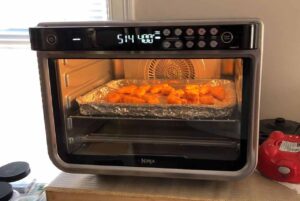
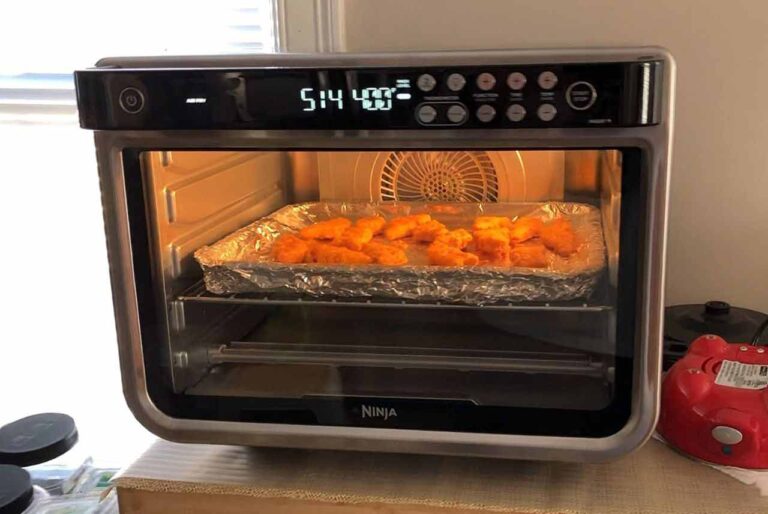
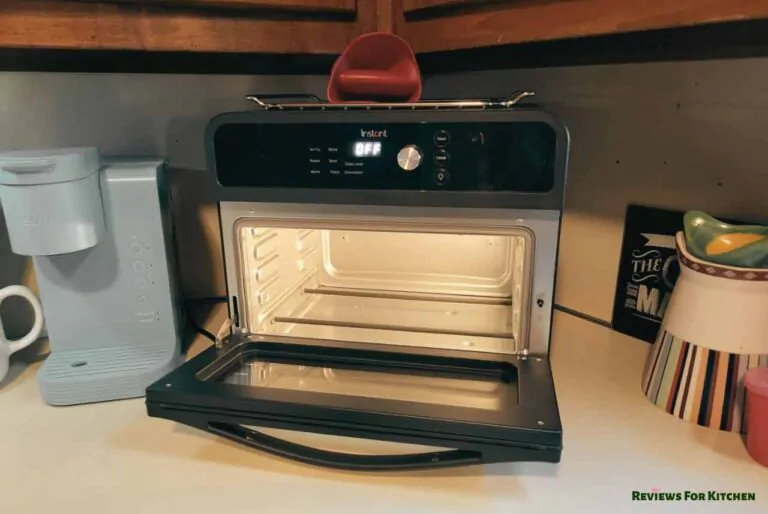
Basket air fryers circulate hot air in a compact, enclosed space around food — producing faster cooking and more aggressive crisping on all surfaces. Air fryer toaster ovens have more usable flat space and handle pizza, sheet pan meals, and toast better, but don’t crisp quite as effectively for the same volume of food. The right choice depends on whether you cook more “crispy things” or more “flat things.”
How long should an air fryer last?
With regular cleaning and reasonable use, a mid-range air fryer should last 3–5 years. The parts that fail first are typically the non-stick coating (if metal utensils or abrasive cleaners are used) and the heating element. Buying a model with a replaceable basket sold separately by the manufacturer significantly extends the machine’s useful life.
Do I need to preheat my air fryer?
For most foods, a 3–5 minute preheat genuinely improves results — especially for anything where a crispy exterior is the goal: fries, wings, breaded items. For reheating leftovers or vegetables where texture is less critical, you can usually skip it. Some newer models preheat automatically; if yours doesn’t, it’s worth building the habit. Note: preheat times and settings may vary for different models.
Can I put parchment paper in an air fryer?
Yes — but only with food on top of it. Never preheat with a bare parchment liner in the basket; the airflow will blow it up into the heating element, which is a genuine fire hazard. Pre-cut air fryer liners with holes punched through them are safer because the holes maintain airflow through the liner rather than around it.
Why is my air fryer smoking?
White or light gray smoke is almost always caused by grease splatter on the heating element — either from a fatty food in the basket or accumulated grease from previous sessions. It’s not dangerous, but it means the machine needs a thorough clean. Dark or black smoke means unplug immediately and inspect for a blockage or food debris near the element.
Can I cook frozen food directly from frozen?
Yes — and this is one of the air fryer’s best use cases. Frozen fries, nuggets, fish sticks, mozzarella sticks all go straight from the freezer to the basket. Add about 3–5 minutes to standard cooking times and check for doneness before serving. No thawing required. Cooking times may vary for different models and food thickness.
The Bottom Line: Buy for Your Actual Kitchen, Not the Ideal One
The best air fryer isn’t the one with the most features on the box or the highest number of presets. It’s the one that fits your household size, suits the foods you actually cook most often, stays on your counter because it’s easy to use and clean, and doesn’t require you to think too hard to get a good meal on a Tuesday night.
Start with capacity — match it to your household honestly, not optimistically. Get the coating material right if that’s a priority for your family. Then look at special functions with an honest eye: which ones will you actually use in three months, not just in the first week of excitement?
Everything else — brand name, color, digital versus dial controls, how many cooking modes the display shows — is secondary. Some of the best-performing air fryers we’ve tested are mid-range models with simple controls and a good basket. Some of the most frustrating are expensive, feature-packed machines that were a pain to clean and produced inconsistent results.
Once you have your machine home, take care of it. Clean it after every use. Check the heating element regularly. Replace the basket when the coating starts to wear rather than using a damaged one. A well-maintained mid-range air fryer will outperform a neglected premium one every time.
Wherever you land on the feature spectrum, use the sections above to find your match — whether that’s nailing crispy wings, finding an air fryer with a coating you feel good about, or picking the right model for a large and hungry household. And once your new machine is home, bookmark our cleaning guide — starting that habit on day one makes a bigger difference than most people expect.
Go make something crispy. You’ve earned it.