I remember standing in a kitchen showroom, completely overwhelmed. There were maybe twenty different range hoods on display. Some were sleek and modern. Some looked industrial. Some had buttons all over them. I had no idea what the differences actually meant or which one would work in my kitchen.
That’s when I realized: knowing how to choose the best vented range hood isn’t something that comes naturally. Most of us don’t buy one until we really need to, which means we’re shopping without experience.
But here’s the good news—once you understand what actually matters, the choice becomes way simpler. You don’t need to know everything about range hoods. You just need to know the few factors that actually affect your experience. That’s what this guide covers. By the end, you’ll know exactly what to look for, what questions to ask, and how to pick a hood that fits your kitchen and cooking style perfectly.
Quick Summary: Your Range Hood Buying Checklist
- Determine your CFM needs — This is the power rating that matters most; calculate based on your stove size and cooking style
- Measure your space carefully — Width, depth, height, and ductwork routing determine what actually fits
- Decide between ducted and ductless — Ducted vents outside (better), ductless recirculates air (easier to install)
- Choose your installation type — Under-cabinet, wall-mounted, island, or insert all have different requirements
- Evaluate grease removal ability — Filter type and design matter more than you’d think for kitchen air quality
- Consider noise levels — A powerful hood that sounds like a jet isn’t worth it if you can’t stand the noise
- Check lighting and controls — LED lights, touch controls, and timer functions add convenience but also cost
Understanding the Basics: What Makes a Vented Range Hood Different
Let me start with the most important distinction: a vented (ducted) range hood is fundamentally different from a ductless hood. And if you’re here reading about vented hoods, you’re probably making the right choice for air quality.
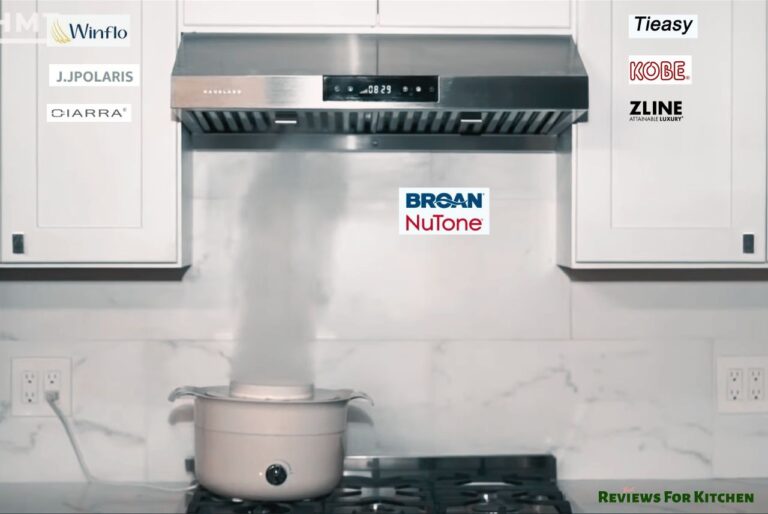
A vented range hood pulls air from above your stove, runs it through a filter to catch grease, then exhausts that air completely outside through ductwork. This is the gold standard for kitchen ventilation. It removes heat, steam, cooking odors, and grease particles from your home entirely.
A ductless hood, by contrast, filters the air and sends it right back into your kitchen. It’s easier to install, but it’s less effective because you’re still recirculating some pollutants.
Here’s the reality: if you’re asking how to choose the best vented range hood, you’ve already made the right first choice. You understand that venting outside is superior. Now we just need to find the right vented hood for your specific situation.
Factor 1: CFM Rating (The Power That Actually Matters)
CFM stands for cubic feet per minute. It’s basically the measurement of how much air your hood can move. This is the most important spec when you’re choosing a range hood—way more important than brand, color, or fancy features.
How Much CFM Do You Actually Need?
Here’s the general rule: you need about 100 CFM for every 10 inches of cooktop width. So if you have a 30-inch stove, you need roughly 300 CFM. A 36-inch stove? About 360 CFM.
But here’s where it gets more real: if you cook a lot, or you cook foods that produce heavy smoke and grease (like Asian stir-fries or burgers), you probably want 50% more CFM than the basic calculation. Go with 450-540 CFM for that 36-inch stove instead of 360.
If you barely cook and mostly heat up leftovers, you can go on the lower end. But don’t cheap out too much. Underpowered hoods don’t work, and then you’re stuck with a smelly kitchen.
According to America’s Test Kitchen, proper kitchen ventilation capacity is often underestimated by homeowners, leading to inadequate smoke and odor removal. They recommend calculating conservatively rather than undershooting your actual cooking needs.
Pro Tip: Check the Actual CFM, Not Just the “Maximum”
Some hoods advertise a high CFM number, but that’s only when running at full blast. Check the specs for the CFM at a reasonable, quieter setting. A hood might say “400 CFM max” but only deliver 250 CFM at a normal operating speed. That’s a huge difference.
Factor 2: Installation Type and Space Requirements
A powerful hood means nothing if it doesn’t fit your kitchen or if installation would cost you a fortune.
Under-Cabinet Hoods (Most Common)
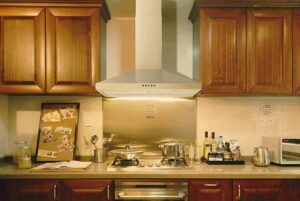
These mount directly under a cabinet above your stove. They’re the standard choice for most kitchens. They’re relatively affordable, easy to install, and they save space.
What to measure: The width of your cooktop (hood should be at least as wide), the depth from the back wall to where the hood can extend without blocking cabinets, and whether you have a cabinet to mount to.
Installation challenge: You need ductwork running from the hood to outside. This can be simple (if your ductwork path is clear) or complicated (if you need to route through walls or cabinets). Ask your installer about this specifically.
Wall-Mounted Hoods (For Island Stoves)
If your stove is on an island in the middle of your kitchen, a wall-mounted hood mounts to the wall behind it. These are sleek and look great, but they’re pricier and installation can be complex.
What to measure: Make sure you have clearance above the stove and enough wall space. Wall-mounted hoods need more vertical clearance than under-cabinet models.
Island/Ceiling-Mounted Hoods
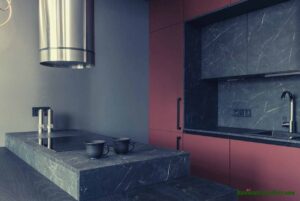
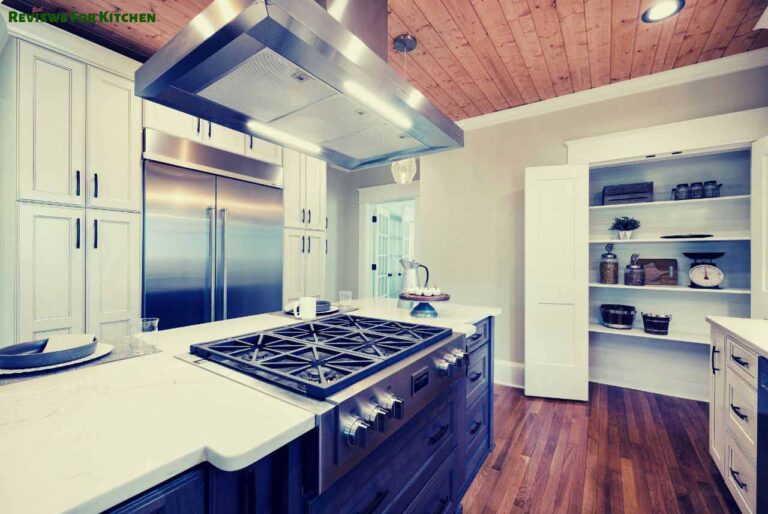
The fanciest option. These hang from the ceiling above an island stove. Beautiful, but expensive and installation is serious business (usually requires professional help).
Downdraft Hoods (The Space-Saver)
These pull air down instead of up, so they don’t require a hood above your stove. Space-efficient, but generally less effective at capturing smoke. Useful if cabinet space is tight, but not ideal for heavy cooking.
Wondering about the differences between ducted and ductless options? We have a detailed comparison on ducted vs convertible range hoods that covers installation considerations for each.
Factor 3: Ductwork Considerations (The Hidden Challenge)
Here’s something a lot of people don’t think about until it’s too late: ductwork is often more complex than the hood itself.
Duct Size and Type
Most under-cabinet hoods use 6-inch diameter ductwork. Some larger models need 8-inch. The size matters because undersized ducts create backpressure, which reduces your hood’s actual CFM performance.
Your ducts should be smooth, rigid metal ducting (not flexible aluminum dryer vent hose). Flexible ducts trap lint and grease, reducing efficiency and creating fire hazards. Insist on proper rigid ductwork.
Ductwork Routing
You need a clear path from your hood to the outside of your home. This might be:
- Straight up through the attic to the roof (easiest, if possible)
- Horizontally through a wall (common in apartments or kitchens near exterior walls)
- Through cabinetry and walls (more complex, more expensive)
Before you buy a hood, figure out your ductwork route. If installation requires major construction, that affects your total cost significantly.
Damper Requirement
Every vented hood should have a damper at the end of the duct (where it exits outside). This prevents cold air and pests from coming back in when the hood isn’t running. Make sure your hood includes one or that you install one separately.
Factor 4: Grease Removal and Filter Type
Not all filters are created equal. The type of filter your hood uses directly impacts how well it handles grease—which is one of the biggest challenges in kitchen ventilation.
Mesh Filters
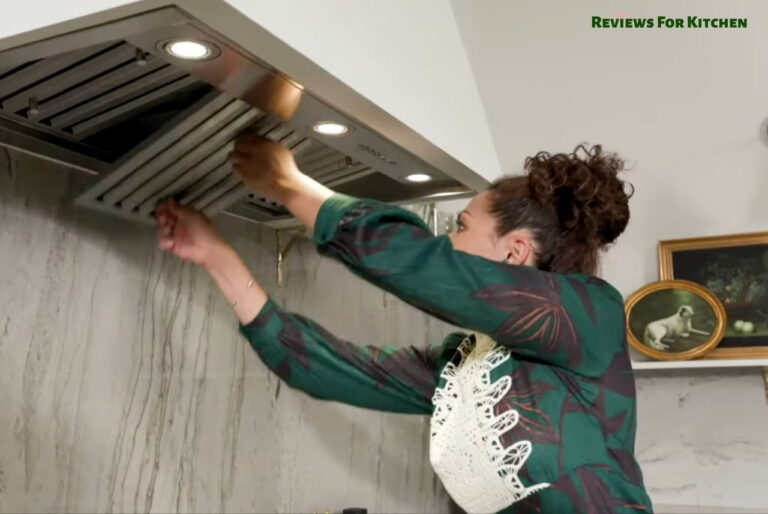
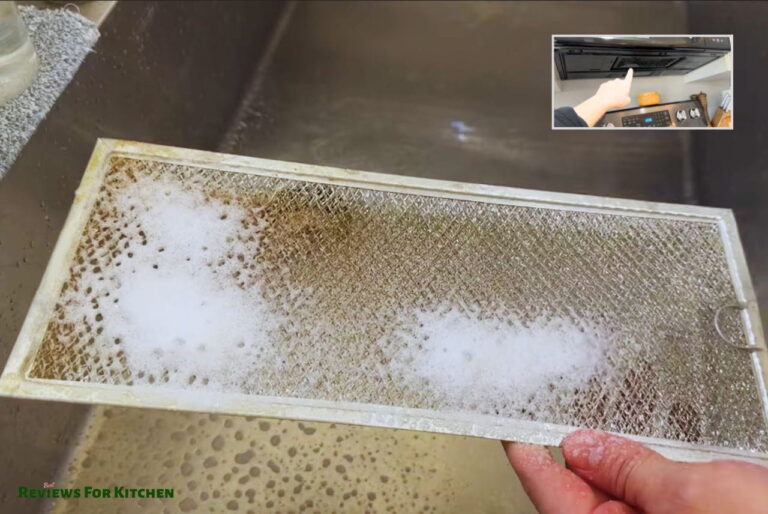
Aluminum mesh filters are the standard. They’re affordable, dishwasher-safe, and easy to maintain. They work well for most home cooking situations.
Baffle Filters
These solid, curved filters force air to change direction multiple times, trapping more grease than mesh. They’re more effective but also harder to clean and pricier to replace. Good for heavy cooking.
Charcoal Filters (Ductless Only)
If you ever consider a ductless hood, know that charcoal filters can’t be cleaned—they must be replaced every 6 months or so. This ongoing cost adds up.
If you’re interested in understanding which hoods excel at grease removal, our guide on the best range hoods for grease removal breaks down performance by filter type and design.
Factor 5: Noise Level (Don’t Ignore This)
A powerful hood that sounds like a jet engine in your kitchen gets old fast. You might avoid using it because the noise annoys you, which defeats the whole purpose.
Understanding Noise Ratings
Range hoods are rated in sones or decibels. Lower is quieter. Most decent hoods run between 3-8 sones at normal operating speed. Anything above 8 sones is genuinely loud.
Pro tip: Read reviews from actual homeowners. They’ll tell you if a hood is uncomfortably loud in real-world use. Spec sheets don’t capture what it actually sounds like when you’re cooking.
Why Noise Matters More Than People Think
If your hood is too loud, you won’t use it as much. Which means your kitchen air quality suffers. A quieter hood that you actually run regularly beats a silent one that you avoid. Find the balance.
Factor 6: Lighting and Controls (The Convenience Features)
These won’t change how well your hood works, but they do affect day-to-day convenience.
Lighting Options
Most hoods come with either incandescent or LED lights. LED is brighter, lasts longer, and uses less energy. If you’re shopping now, LED is the way to go. The extra cost is worth it.
Control Types
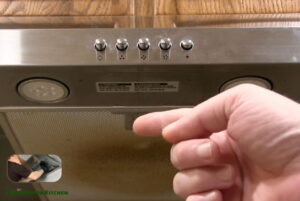
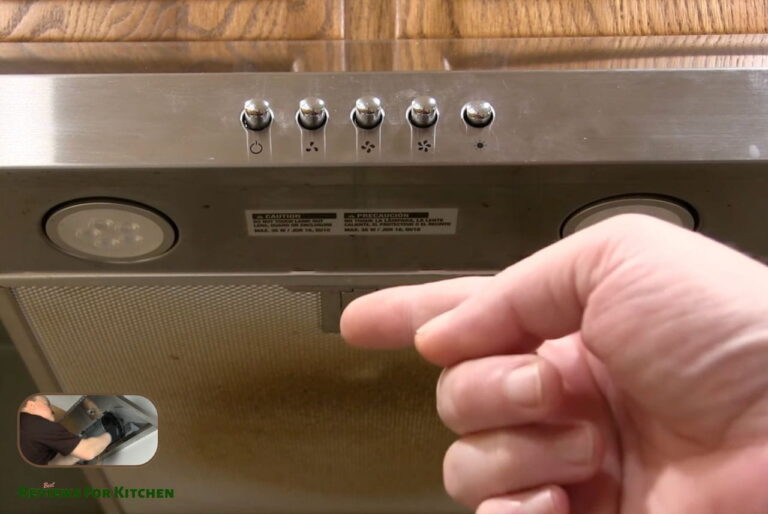
You can get mechanical push buttons, slide controls, touch controls, or even smart controls. More complex controls cost more and have more things that can break. Simple mechanical controls are honestly fine—they’re reliable and do the job.
Fan Speed Settings
Most hoods have multiple speed settings (low, medium, high). This is genuinely useful. Sometimes you only need low speed, which is quieter and uses less energy. Having options matters.
Frequently Asked Questions About Choosing a Vented Range Hood
Q: Is a more expensive hood always better?
Not necessarily. Price reflects brand, design, and features—not always performance. A $300 hood with the right CFM and filter type often outperforms a $800 hood with fancy controls but lower CFM. Focus on specs, not price.
Q: Can I install a vented range hood myself?
Simple installation (mounting an under-cabinet hood with existing ductwork) is doable for handy people. New ductwork installation? Call a professional. Electrical work? Definitely call a professional. Know your limits.
Q: What’s the difference between vented and ductless range hoods?
Vented hoods exhaust air outside (better air quality, removes heat and humidity). Ductless hoods recirculate filtered air back into the kitchen (easier to install, less effective). Vented is superior for most situations.
Q: How do I know if my kitchen can support a vented hood?
If you have or can run ductwork to the outside of your home, you can support a vented hood. If you’re in an apartment with no exterior access and no existing ductwork, ductless might be your only option.
Q: Should I buy the biggest CFM hood available?
Not unless you really cook heavily. An oversized hood uses more energy, costs more upfront, and is often noisier than necessary. Calculate your actual needs and stick to that range.
Q: What warranty should I expect?
Most quality hoods come with a 2-5 year manufacturer’s warranty on parts and labor. Check the warranty before buying. Short warranties often indicate quality issues.
The Bottom Line: Prioritize What Actually Matters
Let me be real with you: choosing a vented range hood doesn’t have to be complicated. You don’t need the fanciest model or the most expensive brand. You need a hood that fits your space, has adequate CFM for your cooking style, removes grease effectively, and isn’t deafeningly loud.
Start with the basics. Calculate your CFM needs. Measure your space. Figure out your ductwork situation. Choose a filter type that matches your cooking frequency. Then find a hood that checks those boxes.
Everything else—the aesthetic design, the smart controls, the fancy lighting—those are bonuses, not necessities. A solid mid-range hood from a reputable manufacturer usually beats a premium hood that doesn’t fit your actual needs.
Before you finalize your choice, check out our guides on range hoods that excel at grease removal and the differences between ducted and convertible hoods to make sure you’re considering all your options. The right hood transforms your cooking experience—worth taking the time to choose well.
People also search for
- What Is the Best Range Hood for Grease Removal?
- Convertible vs Ducted Range Hood | Which to Choose
- The Ultimate Vented Range Hood Installation Guide
- How to Maintain Range Hood Filters
- How to Fix a Range Hood That’s Not Venting Properly
- 5 Best Vented Range Hood for Your Healthy Kitchen
- Best Ductless Under Cabinet Range Hood for Convenient Cooking
- Best Vented Range Hood Brands for Your Kitchen