A few years back, I helped a friend move into a house that had clearly never had a functional range hood. The kitchen cabinets above the stove were coated in a yellowish film, the walls had that unmistakable greasy haze, and the ceiling — well, we just didn’t talk about the ceiling. The previous owners had a hood. It just wasn’t doing the one thing a hood is supposed to do: actually capture grease before it lands on every surface in your kitchen.
That experience made me genuinely obsessed with understanding what separates a great range hood from one that just looks the part. And the question I get asked most often by people remodeling or replacing a hood is exactly this: what is the best range hood for grease removal — not just for looks, not just for noise level, but specifically for pulling grease particles out of the air before they coat everything you own?
The answer involves a few specific features that most buying guides gloss over. In this post, I’ll break down how grease capture actually works, which hood types and filter designs do it best, what CFM rating you actually need, and what mistakes to avoid when shopping. No fluff, just the stuff that matters.
Quick Takeaways Before We Dive In
- CFM (airflow power) is the single most important factor for grease removal — underpowered hoods simply can’t keep up
- Ducted hoods are significantly better at grease removal than ductless recirculating hoods
- Baffle filters outperform mesh filters for grease capture and are much easier to clean
- Hood size should match or exceed your cooktop width — wider coverage means more grease captured
- Hood height above the cooktop affects performance dramatically — the right mounting distance matters
- High-heat cooking (frying, searing, wok cooking) requires more CFM than light cooking — match your CFM to your actual cooking style
How Range Hoods Actually Capture Grease (The Science Is Worth Knowing)
Most people think of a range hood as basically a big fan above the stove. And technically, yes — but the grease removal process is a bit more interesting than that, and understanding it helps you make a much smarter buying decision.
What Happens to Grease Particles When You Cook
When you cook at high heat — especially frying, searing meat, or stir-frying — the fat in your food heats past its smoke point and vaporizes into microscopic airborne particles. These particles are light enough to travel upward with the rising thermal plume of hot air above your cooktop. That rising column of hot, greasy air is called the cooking plume, and capturing it before it disperses into the room is exactly what a range hood is designed to do.
Here’s the key: the cooking plume spreads as it rises. The farther the hood is from the cooktop, the wider the plume has gotten by the time it reaches the filters — and the more likely it is that some of that greasy air escapes around the sides of the hood entirely. This is why hood size, mounting height, and airflow power all matter so much for real-world grease capture.
What the Filter Is Actually Doing
The grease filters in your range hood aren’t filtering the air the same way an air purifier does. Instead, they work through a process called inertial impaction — the fast-moving air has to change direction as it passes through the filter’s baffles or mesh, and the heavier grease particles can’t change direction fast enough. They slam into the filter surface and stick there, while the lighter air continues through.
This is why filter design matters so much. The more direction changes the air has to make (more baffles, more layers, more tortuous path), the more grease gets captured. And this is exactly why baffle filters consistently outperform flat mesh filters for grease removal — more on that in a moment.
Why Ducted Hoods Win on Grease Removal Every Time
A ducted (vented) hood pulls grease-laden air through the filter, captures most of the grease in the filter, and exhausts the remaining air outside. Whatever tiny amount of grease makes it past the filter goes with it — out of your kitchen entirely.
A ductless recirculating hood pulls air through a grease filter, then through a charcoal filter, and pushes it back into the kitchen. The charcoal filter handles odors, but any grease that makes it past the grease filter goes right back into your kitchen air. For serious cooking — anything involving high heat or frying — a ducted hood is substantially more effective at keeping your kitchen clean. The Kitchn’s comparison of ducted vs. ductless hoods makes this case clearly: if you cook frequently and grease is a real concern, ducted is the right choice whenever it’s possible to install.
The Filter Question: Baffle vs. Mesh and Why It Matters More Than Most People Think
I used to assume all range hood filters were basically the same — just a metal screen sitting between the cooking surface and the fan. Wrong. The filter type has a significant effect on how much grease actually gets captured versus how much escapes into your kitchen or ductwork. This is one of the most underappreciated factors in the whole range hood conversation.
Mesh Filters: Common, But Not the Best for Grease
Aluminum mesh filters are the most common type found in residential range hoods, particularly mid-range and budget models. They’re made from layers of woven aluminum mesh stacked together, and they do capture a reasonable amount of grease — especially for light cooking.
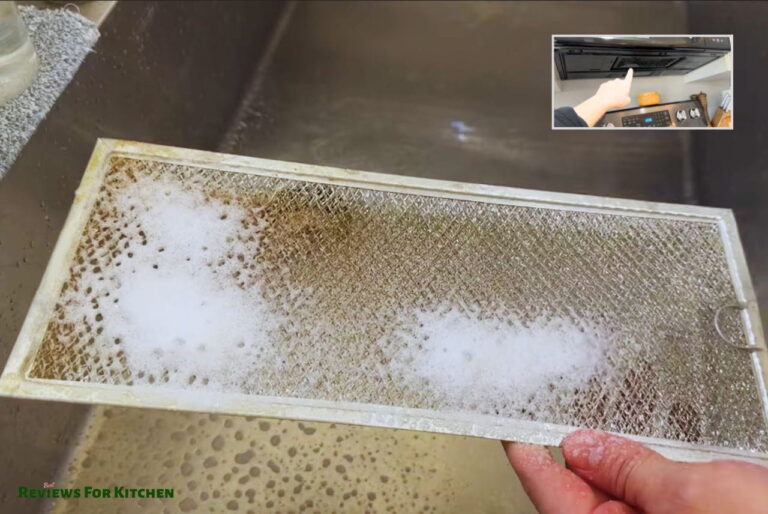
The problems start when you do any serious high-heat cooking. Mesh filters saturate with grease faster than baffle filters, and once they’re saturated, their efficiency drops significantly. A heavily clogged mesh filter also restricts airflow, which means the whole hood becomes less effective at everything — not just grease capture, but odor removal and smoke clearing too. They’re also harder to clean thoroughly because grease gets trapped deep in the mesh layers.
Baffle Filters: The Clear Winner for Grease Removal
Baffle filters are the professional kitchen standard, and for good reason. Instead of a flat mesh, they use a series of curved metal channels (baffles) that force incoming air to change direction repeatedly as it passes through. Each direction change throws more grease particles out of the airstream and into the filter’s collection channels, where they drip down into a small grease trap.
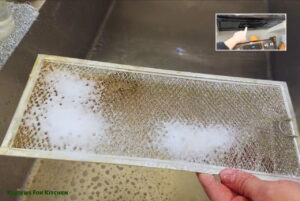
The result: higher grease capture efficiency, less grease making it into your ductwork, and a filter that’s dramatically easier to clean. You simply remove the baffle sections and run them through the dishwasher — the open channel design rinses clean much more easily than tightly woven mesh. For anyone who does frequent high-heat cooking, frying, or wok cooking, baffle filters are the only filter design worth considering.
Most professional-style and higher-end residential hoods come standard with baffle filters. Some mid-range hoods offer them as an upgrade. If you’re comparing hoods and one offers baffle filters while a similarly priced competitor offers only mesh, the baffle filter option is the better choice for grease removal — full stop.
Charcoal Filters: Odor, Not Grease
Just to clear up a common misconception: charcoal (activated carbon) filters don’t meaningfully capture grease. They’re designed for odor absorption on ductless recirculating hoods. If you have a ducted hood, you don’t need charcoal filters at all. If you have a ductless hood, charcoal filters handle smells but you still need a grease filter in front of them to protect the charcoal layer from saturating with fat, which ruins its odor-absorbing capacity quickly.
CFM: How Much Airflow Do You Actually Need for Effective Grease Removal?
CFM stands for cubic feet per minute — it’s the measurement of how much air volume the hood can move per minute. And it’s the single most important specification when evaluating a range hood’s ability to capture grease. An underpowered hood, no matter how beautiful or expensive it looks, simply cannot keep up with the volume of greasy air a busy cooking session produces.
The General CFM Guidelines
The industry standard recommendation is 100 CFM for every 10,000 BTUs of cooktop output. For electric cooktops, the guideline is roughly 1 CFM per 10 watts of total element wattage. These are starting points — your actual cooking habits matter a lot too.
| Cooking Style | Cooktop Type | Recommended CFM |
|---|---|---|
| Light cooking (boiling, steaming, low heat) | Electric or gas | 200–300 CFM |
| Moderate everyday cooking | Electric | 300–400 CFM |
| Moderate everyday cooking | Gas (up to 40,000 BTU total) | 400–500 CFM |
| Frequent frying, searing, high-heat cooking | Gas or induction | 500–700 CFM |
| Wok cooking, professional-style burners | High-BTU gas (60,000+ BTU) | 900–1200 CFM |
Why Most People Underestimate Their CFM Needs
Let me be real with you: the range hoods that come pre-installed in most tract homes and apartment renovations are almost always underpowered. A 200 CFM hood over a 4-burner gas range is like putting a box fan in front of a campfire. It moves air, but not nearly enough of it to capture the cooking plume effectively when you’re actually cooking at high heat.
I’ve talked to so many people who think they just need to clean their hood more often, when the real issue is that the hood was never powerful enough for their cooking style in the first place. If your kitchen walls and cabinets are accumulating grease even with the hood running, insufficient CFM is the likely explanation — before you look at filters or anything else.
The CFM vs. Noise Trade-Off
Higher CFM means more airflow — and typically more noise. This is a real trade-off and it’s worth thinking about honestly. A 1200 CFM hood running at full blast sounds like a small aircraft. Most people find that a well-designed 500-600 CFM hood running at medium speed strikes a good balance between effective grease capture and tolerable noise for everyday cooking.
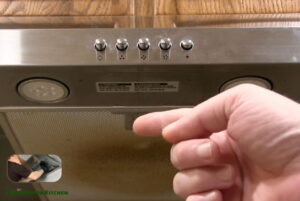
Look for hoods with variable speed settings (at least 3, ideally 4-6) so you can run higher CFM when you’re actually frying something, and lower when you’re just simmering a sauce. The best grease removal happens when you match the fan speed to the actual cooking intensity — not just blasting it on max every time.
Hood Type and Size: Matching Your Hood to Your Cooktop for Maximum Grease Capture
Beyond CFM and filter type, the physical configuration of your range hood — its type, size, and mounting position — has a direct effect on how much grease it can realistically capture. A correctly sized and mounted hood captures significantly more grease than an undersized or too-high-mounted hood, even at the same CFM rating.
Hood Width: Always Match or Exceed Cooktop Width
The cooking plume rises and spreads as it goes up. A hood that’s the same width as your cooktop is capturing some of that spreading plume — but a hood that’s 3-6 inches wider on each side captures substantially more because it covers the full spread of the rising air column. For serious grease reduction, going 6 inches wider than your cooktop (so a 36-inch hood over a 30-inch cooktop, or a 42-inch hood over a 36-inch cooktop) is the professional recommendation.
This is especially important if you cook frequently on all burners, use large pans that extend close to the cooktop edges, or do any high-heat cooking that generates a wide cooking plume.
Mounting Height: Closer Is Better, Within Reason
Most residential range hoods are designed to be mounted 24-30 inches above the cooking surface (check your specific hood’s manual — this varies). The lower end of that range captures more grease because the plume hasn’t spread as wide yet when it hits the filter. However, mounting too low creates a safety hazard with open flames on a gas cooktop and makes the space feel cramped.
For electric and induction cooktops, you have more flexibility to mount at the lower end of the recommended range — which improves grease capture without the flame clearance concerns of gas. For gas cooktops, follow the manufacturer’s minimum clearance recommendation carefully, then mount as low as safely possible within that range.
Which Hood Style Works Best for Grease Removal?
Hood style (wall-mount chimney, under-cabinet, island, insert) affects aesthetics and installation requirements more than raw grease capture performance — as long as the CFM rating and filter type are right for your cooking style. That said, a few practical notes:
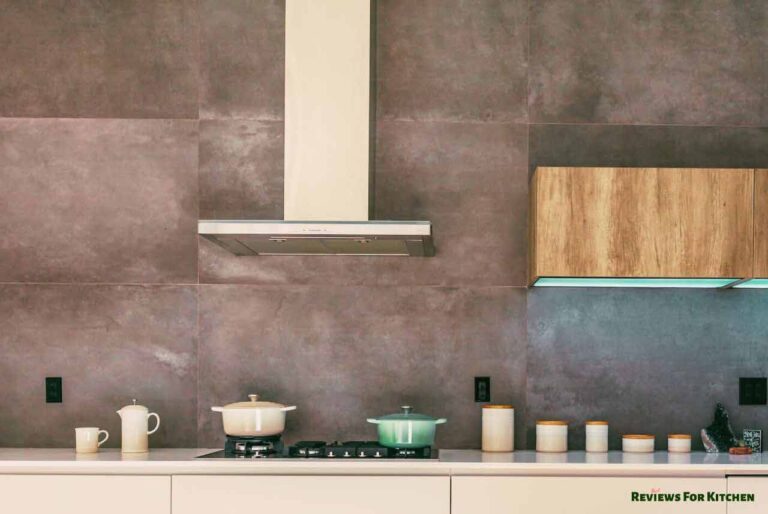
- Wall-mount chimney hoods typically offer higher CFM options and are more often paired with baffle filters — good for heavy cooking
- Under-cabinet hoods are convenient and space-efficient, but tend to max out at lower CFM ratings; fine for moderate cooking, less ideal for frequent high-heat use
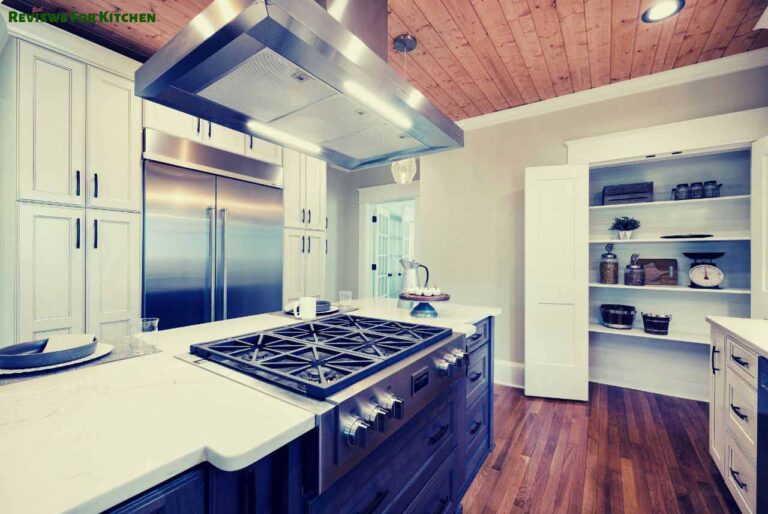
- Island hoods need higher CFM than wall-mount hoods of the same size because they don’t have a wall to help funnel the cooking plume — add 20-30% more CFM as a rule of thumb
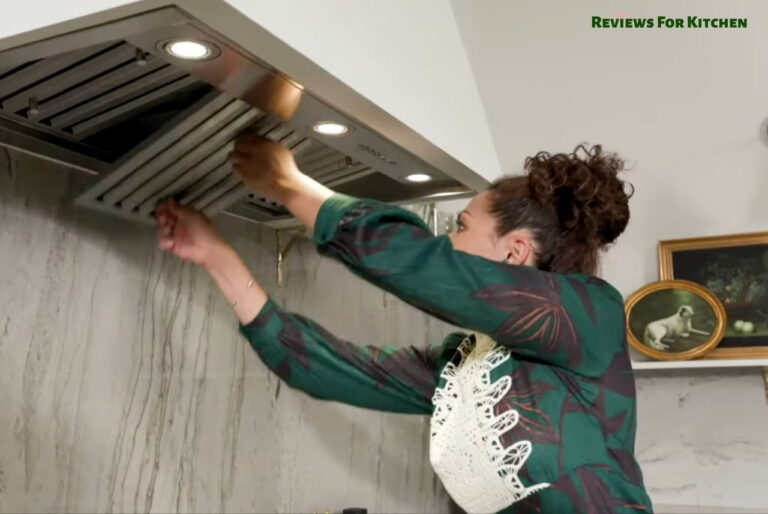
- Insert/liner hoods (where just the blower is installed inside custom cabinetry) allow for very high CFM options and professional-grade performance
If you’re trying to decide between a convertible and a fully ducted setup for your specific kitchen layout, our comparison of convertible vs. ducted range hoods breaks down which configuration makes sense for different kitchen types and installation scenarios.
Features That Actually Help With Grease Removal (And a Few That Don’t)
Range hood feature lists have gotten long and impressive-sounding. Some of those features genuinely improve grease removal performance. Others are just nice-to-have convenience features that don’t meaningfully affect how clean your kitchen stays. Here’s an honest breakdown.
Features That Genuinely Improve Grease Capture
Auto-speed sensor: Some higher-end hoods include a heat sensor or cooking sensor that automatically increases fan speed when it detects a hot cooking plume. This is actually useful — it means the hood ramps up before grease has a chance to escape the capture zone, rather than waiting for you to manually turn it up. It’s a premium feature but a meaningful one if grease management is your priority.
Delayed shutoff (after-cook purge): A hood that continues running for several minutes after you turn off the cooktop captures the residual grease-laden air that keeps rising as the cooktop cools. This one feature alone can make a noticeable difference in how much grease ends up on your cabinets over time. Many mid-range and higher hoods include it — look for it specifically when shopping.
Grease drip collection tray: Baffle filters with an integrated drip tray allow captured grease to collect in a removable container rather than pooling at the bottom of the hood interior. It’s a cleanliness feature, but it also keeps the filter system working efficiently longer between cleanings, which maintains consistent grease capture performance.
Features That Are Nice But Don’t Affect Grease Performance
- LED lighting (great for visibility while cooking, no grease capture benefit)
- Touch controls vs. traditional switches (pure convenience preference)
- Wi-Fi connectivity and app control (convenient, no performance impact)
- Stainless steel finish (durable and easy to clean, but doesn’t affect airflow or capture)
- Built-in Bluetooth speakers (yes, these exist — still not capturing more grease)
What Actually Matters for Long-Term Grease Management
According to Serious Eats’ guide on kitchen ventilation, consistent maintenance of your grease filters matters as much as the initial filter quality for long-term performance. A high-quality baffle filter that’s never cleaned will eventually perform worse than a basic mesh filter that gets cleaned monthly. The best grease removal system is one you actually maintain — which is another reason baffle filters win: they’re genuinely easier to keep clean.
For anyone already struggling with a hood that’s not keeping up, our guide on how to choose the best vented range hood for your kitchen walks through the full selection process from scratch, including how to evaluate your specific kitchen’s needs before committing to a purchase.
Common Mistakes That Undermine Your Range Hood’s Grease Removal
Even a great hood performs poorly if it’s being used wrong or maintained incorrectly. These are the mistakes I see most often — and they’re all fixable once you know about them.
Running the Hood Only After You Start Smelling Smoke
Turn the hood on before you start cooking, not after smoke is already in the air. The cooking plume starts rising as soon as you apply heat, and the grease particles are in the air before any visible smoke appears. Running the hood 2-3 minutes before you start cooking gives the airflow pattern time to establish and puts the capture zone right where the plume will rise. This single habit change makes a noticeable difference in how much grease stays on your surfaces.
Cooking on Too High a Heat Without Adjusting Fan Speed
A lot of people set their hood fan to a comfortable low or medium speed and leave it there regardless of what they’re cooking. That works fine for simmering soup. It does almost nothing when you’re searing a steak or deep frying. Match your fan speed to your cooking intensity — high heat cooking needs high fan speed. Yes, it’s louder. But that’s the sound of your kitchen actually staying clean.
Ignoring Filter Cleaning Until It’s a Problem
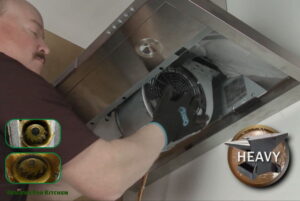
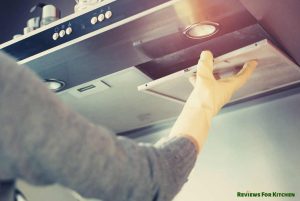
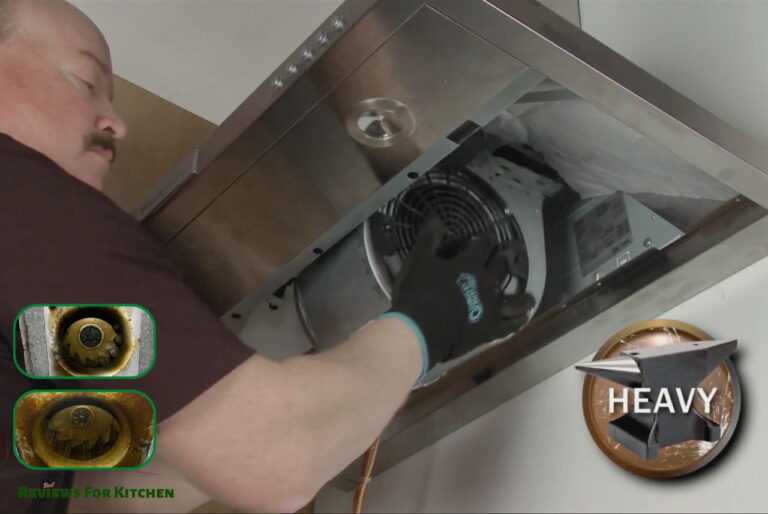
I used to let my grease filters go way too long between cleanings — mostly because out of sight, out of mind. Then I pulled them out one day and was genuinely horrified. Saturated filters don’t just capture less grease — they restrict the airflow that the whole hood depends on, reducing performance across the board. Monthly cleaning for regular cooking, every 2-3 weeks if you fry or cook at high heat frequently. Set a reminder and stick to it.
Buying a Hood Based on Looks Alone
The most stunning range hood in a kitchen showroom is often the one with beautiful lines, premium materials, and very mediocre actual performance specs. I’ve seen gorgeous hoods rated at 300 CFM selling for $800, and solidly performing 600 CFM baffle-filter hoods selling for less. For grease removal specifically, specs matter more than aesthetics. A beautiful hood that leaves your kitchen greasy isn’t doing its job.
Frequently Asked Questions
What type of range hood filter is best for removing grease?
Baffle filters are the clear winner for grease removal. Their curved channel design forces air to change direction repeatedly, throwing grease particles out of the airstream far more efficiently than flat mesh filters. They’re also much easier to clean — just run them through the dishwasher. Professional kitchens universally use baffle filters for exactly this reason.
Is a ducted or ductless range hood better for grease?
Ducted (vented) hoods are significantly better for grease removal. They capture grease in the filter and exhaust everything else outside. Ductless recirculating hoods push air back into the kitchen after filtering — any grease that makes it past the filter goes right back into your home. For serious cooking, ducted is the right choice whenever installation is possible.
How many CFM do I need to remove grease effectively?
For moderate everyday cooking on a gas range, 400-500 CFM is a solid minimum. If you fry frequently, sear at high heat, or use high-BTU burners, 600-900 CFM is more appropriate. Undersized CFM is the most common reason range hoods fail to keep kitchens grease-free — most pre-installed residential hoods are significantly underpowered for actual cooking habits.
How wide should my range hood be for the best grease capture?
At minimum, match your cooktop width exactly. For better grease capture, go 3-6 inches wider on each side than your cooktop — so a 36-inch hood for a 30-inch cooktop, or a 42-inch hood for a 36-inch cooktop. The cooking plume spreads as it rises, and a wider hood captures that spreading plume before it escapes around the sides.
Why is grease still building up on my cabinets even with the range hood running?
The most likely causes: insufficient CFM for your cooking style, clogged grease filters reducing airflow, or the hood is mounted too high and the cooking plume spreads past the hood’s capture zone before reaching the filters. Check the filters first (they’re probably overdue for cleaning), then evaluate whether your hood’s CFM rating actually matches your cooking habits.
Does a more expensive range hood remove grease better?
Not automatically — price correlates more with aesthetics, build quality, and brand than with grease removal performance. What actually determines grease capture is CFM rating, filter type (baffle vs. mesh), and hood size relative to your cooktop. A $400 hood with baffle filters and 600 CFM will outperform a $900 hood with mesh filters and 300 CFM every single time.
The Right Hood Keeps Your Kitchen Actually Clean — Not Just Looks Like It Does
When people ask what is the best range hood for grease removal, the answer isn’t a brand name. It’s a combination of the right CFM for your cooking style, baffle filters instead of mesh, a ducted setup that actually exhausts air outside, and a hood sized to match or exceed your cooktop width. Get those four things right and you’ll have a hood that genuinely does the job.
Don’t let a beautiful hood with weak specs fool you. And don’t assume the hood that came with your home was chosen for performance — most weren’t. If your kitchen walls have been telling you the hood isn’t keeping up, they’re probably right.
Start by evaluating your current setup against the CFM guidelines in this post. If you’re shopping for something new, our guide on choosing the best vented range hood for your kitchen gives you the full framework — and when you’re ready to go deeper on ducted vs. convertible options, our convertible vs. ducted range hood comparison covers that decision in detail.
Got questions about your specific setup or a hood you’re considering? Drop them in the comments — happy to help you work through it.