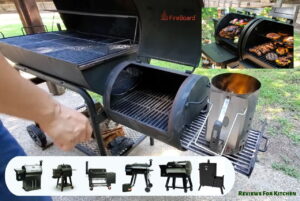
I still remember the first time I tried to buy a smoker. I walked into a big-box store right before Thanksgiving, hoping to find something I could use to smoke a turkey for the family. What I found instead was a wall of grills, smokers, and combo units that all looked the same to me. After twenty minutes of staring at price tags and spec sheets, I walked out empty-handed and more confused than when I walked in. If that sounds familiar, you’re not alone — the smoker buying guide world is genuinely overwhelming when you’re starting from scratch. Offset, pellet, kamado, vertical, electric — the options just keep coming, and every review online seems to recommend something different.
That’s exactly why I put this guide together. I’ll walk you through every major smoker type in plain English, help you figure out which one actually fits your lifestyle and budget, and give you honest picks at every price point. And if you want a trusted second opinion on specific models, Serious Eats has one of the most thorough smoker roundups on the internet — worth bookmarking alongside this guide. No jargon, no fluff — just the stuff that actually matters before you spend your money.
According to Serious Eats, one of the most trusted names in food reviews, pellet smokers have come a long way in delivering real smoky flavor.
| ⚡ Quick Summary |
| • There are 6 main smoker types — offset, pellet, vertical, kamado, electric, and charcoal |
| • Pellet smokers are the easiest for beginners; offset smokers give the most authentic flavor |
| • Budget matters: $300–$700 is the sweet spot for a first quality smoker |
| • Key things to check: steel thickness, cooking area, temperature range, and ease of cleaning |
| • This guide covers every type in plain English — no jargon, just honest advice |
First, Let’s Talk About the 6 Main Types of Smokers
Before we go deep on any one type, here’s a quick cheat sheet so you can see the full picture at once. I’ll break each one down in detail below — but if you’re in a hurry, this table gives you the essentials.
| Smoker type | Fuel | Difficulty | Best for | Price range (USD) |
| Offset smoker | Wood / charcoal | High | Authentic BBQ, competition cooks | $200 – $5,000+ |
| Pellet smoker | Wood pellets | Low | Beginners, busy cooks, set-and-forget | $300 – $2,000 |
| Vertical / cabinet smoker | Charcoal or electric | Medium | Home cooks, ribs, brisket | $100 – $800 |
| Kamado grill | Charcoal | Medium | Versatile — grill AND smoke | $400 – $2,500 |
| Electric smoker | Electricity | Low | Beginners, apartments, easy use | $100 – $600 |
| Charcoal smoker | Charcoal | Medium | Authentic flavor on a tight budget | $100 – $500 |
Note: Prices may vary depending on the brand, model, and where you buy. Always check current pricing before purchasing — deals move fast, especially around Memorial Day and Labor Day.
Offset Smokers — For the BBQ Enthusiast Who Wants the Real Deal
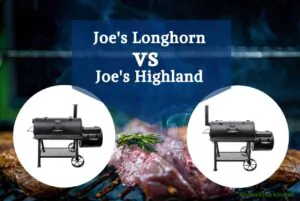
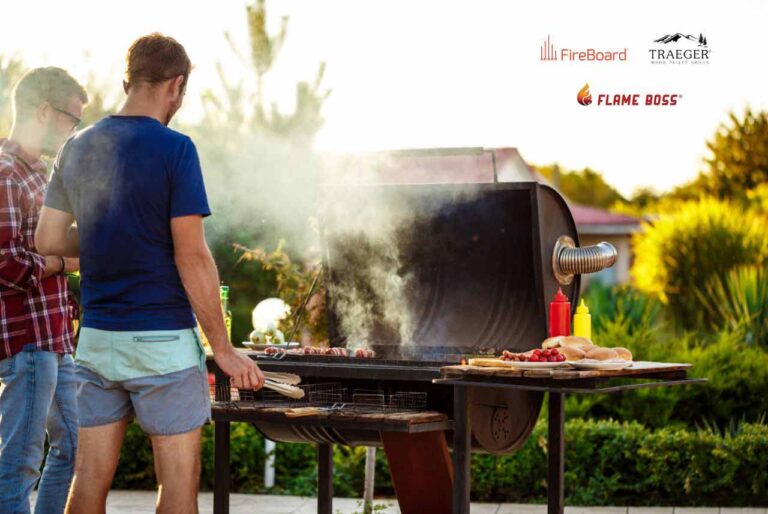
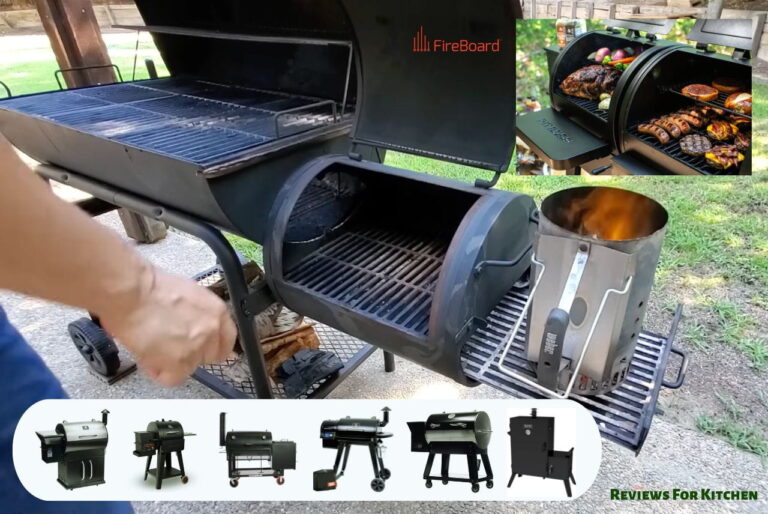
If you’ve ever driven past a roadside BBQ joint and seen that big black barrel with a smaller box welded to the side — that’s an offset smoker. The firebox on the side is where you burn your wood, and the smoke and heat travel through the main cooking chamber where the meat sits. It’s the closest thing to competition-style BBQ you can get in your backyard.
Let’s be honest though — offset smokers are not easy. You’re managing a live fire the whole time, adding wood every 30–45 minutes, adjusting vents, and learning how your specific smoker behaves. The learning curve is real. But once you figure it out? The bark on a brisket, the smoke ring on ribs — nothing else comes close.
Who is an offset smoker actually for?
- People who enjoy the hands-on process of fire management — it’s part of the experience
- Anyone serious about producing competition-quality BBQ at home
- Cooks who want the deepest smoke flavor and best bark on beef brisket and pork ribs
- Patients people — low and slow is a 10–14 hour commitment for brisket
What to check before you buy an offset smoker
Steel thickness: This is the single most important factor. Look for at least 1/4-inch steel. Cheaper models use thin sheet metal that leaks heat everywhere and makes temperature control a nightmare. If the spec sheet doesn’t mention steel thickness, that’s usually a bad sign.
Firebox size: A bigger firebox means longer burns and fewer interruptions. This matters a lot for overnight cooks or anything that runs 8+ hours.
Door and lid seal: Smoke and heat escaping through gap around the lid or door is a common issue on budget models. Tight seals matter.
Cooking area: 500–700 square inches handles most family cooks. If you’re regularly feeding crowds or doing whole briskets, look for more.
Personal note: I always tell people — if you want to buy an offset smoker and your budget is under $300, save up a little longer. A thin-walled cheap offset will frustrate you into quitting. Spending $500–$700 on a decent mid-range model is a much better experience.
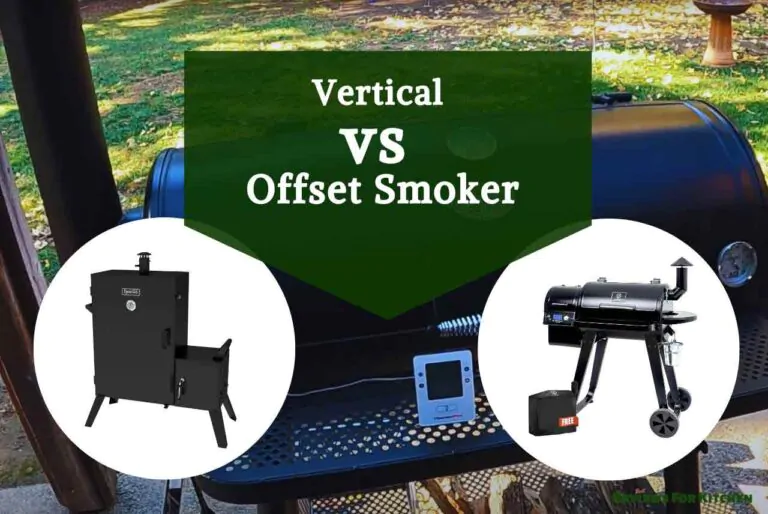
🔗 Offset Smoker vs Vertical Smoker – Key Differences Explained, 🔗 How to control temp on offset smoker? 🔗 Best Offset Smoker Under $2000
Pellet Smokers — The Best Starting Point for Most People
Okay, I’ll be straight with you — if I had to recommend one smoker type to the majority of people reading this, it would be a pellet smoker. Not because it’s the most exciting, but because it genuinely works well for most people’s lives.
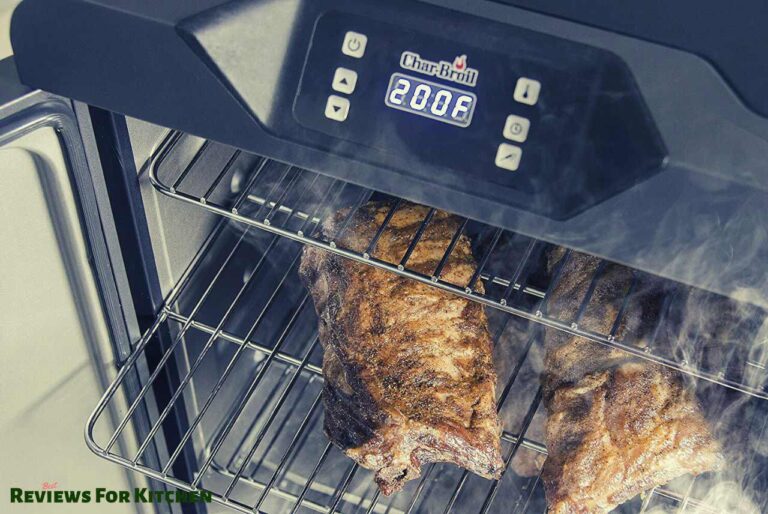
Here’s how it works: compressed wood pellets sit in a hopper on the side of the grill. An auger automatically feeds pellets into a fire pot, and a digital controller keeps your temperature steady. You set it to 225°F, put your brisket on, and go about your day. The app on your phone pings you when you need to check on it. It’s genuinely that simple.
The flavor is real wood smoke — not as intense as a stick-burning offset, but genuinely good. Most guests won’t know the difference unless you tell them.
Key features to compare on pellet smokers
PID controller: A PID controller (Proportional-Integral-Derivative — don’t worry about the name) maintains temperature more accurately than a basic on/off controller. Look for this on mid-range and up models. Traeger, RecTeq, and Grilla Grills all use PID systems.
Hopper capacity: A 18–20 lb hopper gets you through most long cooks without refilling. Smaller hoppers mean more babysitting on overnight cooks.
Wi-Fi app control: Almost all mid-range pellet smokers now include this. It’s genuinely useful — you can monitor temperature from your couch or your neighbor’s backyard cookout.
Cooking area: 700–900 square inches is the sweet spot for most families. That’s enough for 2 briskets or 4–5 racks of ribs at once.
Pro tip: You don’t need to buy the same brand of pellets as your smoker. Traeger pellets work in a Pit Boss. Pit Boss pellets work in a RecTeq. The pellet brand affects flavor more than compatibility. Hickory and oak for beef, apple or cherry for pork and chicken.
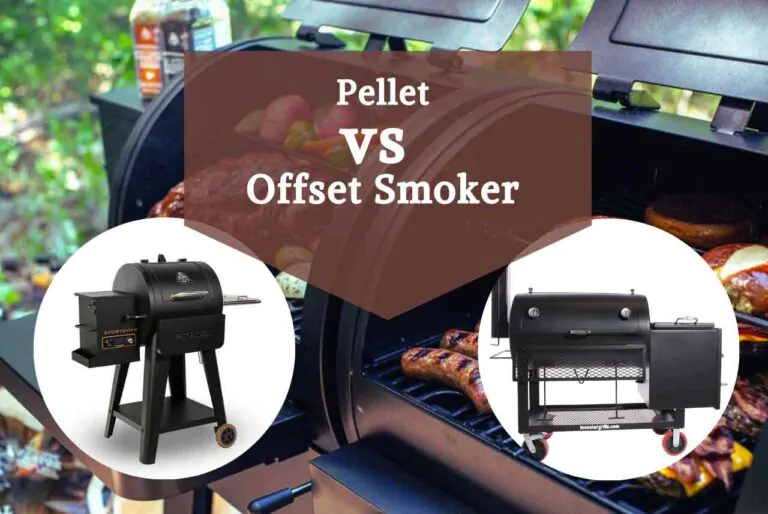
🔗 Pellet Vs Offset Smoker: Which One Will You Choose?, 🔗 Rec tec Vs Traeger, 🔗 Can You Use Traeger Pellets in a Pit Boss Smoker? 🌐 America’s Test Kitchen — ‘Gas Grills and Pellet Grills Review’
Vertical Smokers — Efficient, Compact, and Underrated
A vertical smoker (sometimes called a cabinet smoker or box smoker) stacks everything vertically — heat source at the bottom, multiple cooking racks above it. Heat and smoke rise naturally through the chamber. It’s a simple, efficient design that’s been producing great BBQ for decades.
The Weber Smokey Mountain is probably the most famous example. It’s a classic for a reason — it holds temperature well, it’s easy to learn, and it produces genuinely excellent ribs, brisket, and pork shoulder. I’ve seen pitmasters at serious BBQ competitions using nothing but a WSM.
Why vertical smokers get overlooked — but shouldn’t
- More fuel-efficient than offset smokers — uses less charcoal for the same cook time
- Compact footprint — good for smaller patios or decks in the U.S. and Canada
- Easier to manage temperature than an offset once you get the hang of it
- Multiple racks mean more cooking capacity in a smaller physical space
🔗 Weber Kettle vs Smokey Mountain: Which Is A Better BBQ Smoker? 🔗 Weber Smokey Mountain vs Offset Smoker.
Kamado Grills — The Most Versatile Cooker You Can Own
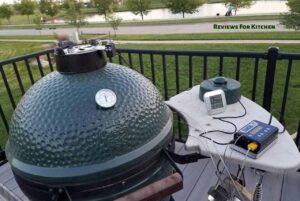
A kamado is a thick-walled, egg-shaped cooker — usually ceramic — and it’s honestly one of the most impressive cooking tools I’ve ever used. The Big Green Egg is the most well-known brand, but Kamado Joe has become just as popular and arguably offers more value.
The thick ceramic walls hold heat like nothing else. I’ve had my kamado sitting at 250°F for 16 hours on one load of charcoal. That’s not an exaggeration. The insulation is genuinely remarkable. And because you can push the temperature up to 700°F+, you can sear a steak on the same cooker you smoked a brisket on the day before.
Where kamados shine — and where they don’t
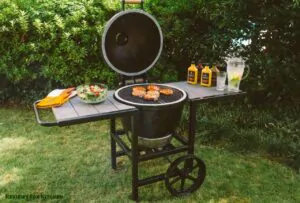
They’re great for: Low-and-slow smoking, high-heat searing, baking (yes, seriously — pizza and bread), and roasting. If you want one cooker that does everything well, this is it.
They’re not ideal for: Cooking large quantities at once. The cooking surface is round, which limits how much you can fit. They’re also heavy — not something you move around easily.
Cost: Kamados are a significant investment. A Big Green Egg large runs $800–$1,100. Kamado Joe regularly goes on sale at Costco in the U.S. for a better price-to-feature ratio.
🔗 Best Replacement Gasket For Big Green Egg. 🔗 Best Kamado Temperature Controller. 🌐 Bon Appétit — ‘What Is a Kamado Grill?’
Electric Smokers — The Easiest Option, Full Stop
If ease of use is your top priority — and there’s absolutely nothing wrong with that — an electric smoker is hard to beat. It works like a big insulated box with a heating element and a wood chip tray. Set your temperature, add some wood chips, and come back when dinner’s ready.
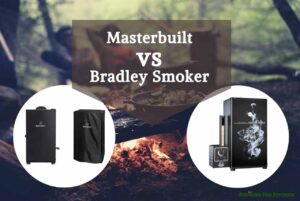
The flavor isn’t quite as deep as charcoal or wood, but it’s still real smoked flavor. Masterbuilt and Bradley are the two biggest names in this space. Masterbuilt is the go-to recommendation for most beginners because of its price point and ease of use.
Note: Features may vary for different models — always check the specific model’s manual for temperature ranges, wood chip tray capacity, and maximum load recommendations.
Electric smokers work especially well if you:
- Live in an apartment or condo where gas and charcoal may be restricted
- Are brand new to smoking and want to learn the basics without fire management
- Cook for smaller groups and don’t need a huge cooking capacity
- Just want reliable, consistent results with minimal setup time
🔗 Can You Use Pellets in An Electric Smoker? 🔗 Masterbuilt vs Bradley Smoker Comparison.
What to Actually Look for When Buying a Smoker
Okay, now that you know your options — let’s talk about the practical stuff. These are the factors I’d focus on when comparing any two smokers, regardless of type.
1. Your honest budget
Here’s the truth about smoker pricing — you generally get what you pay for, but the sweet spot for most people is $400–$800. That range gets you solid build quality, good temperature control, and a smoker that’ll last years with proper care. Here’s a rough breakdown:
| Budget | What to realistically expect |
| Under $300 | Entry-level builds, thinner steel on offset smokers. Fine for learning, may frustrate you long-term. |
| $300 – $700 | Mid-range quality. Good pellet grills (Pit Boss, Z Grills), solid vertical smokers, decent offsets. |
| $700 – $1,500 | Reliable daily-use smokers. Traeger Ironwood, RecTeq 590, Oklahoma Joe. Builds that last. |
| $1,500 – $2,000 | Heavy-gauge steel offsets, premium kamados. Serious durability — buy once, use for decades. |
| $2,000+ | Competition-grade. Yoder, Pitts & Spitts, Lang. Overkill for most home cooks, exceptional quality. |
2. Cooking area — how much space do you actually need?
- Under 450 sq in: 1–2 people, small cuts, apartment-friendly
- 450–700 sq in: Family of 4–6, fits a full brisket or 3 racks of ribs
- 700–1,000 sq in: Hosting and entertaining, multiple proteins at once
- 1,000+ sq in: Catering, competitions, large family gatherings
🔗 How to choose the right size grill for my outdoor space?
3. Steel thickness (for offset and charcoal smokers)
This one matters more than most people realize. Budget offset smokers often use steel as thin as 1/16 inch. Quality smokers start at 1/8 inch and the best ones use 1/4 inch or thicker. Thicker steel retains heat better, uses less fuel, and lasts significantly longer before rusting through.
4. Temperature range and consistency
For low-and-slow smoking, you need to hold 225–275°F reliably. For high-heat searing or finishing, 450–700°F+ is useful. If temperature swings frustrate you, a pellet smoker or kamado with a quality controller handles this best.
🔗 Best BBQ Temperature Controller. 🔗 How to control temperature on charcoal grill?
5. Ease of cleaning
This sounds boring but it genuinely affects how much you use your smoker. Look for removable ash pans, grease management trays that pull out easily, and porcelain-coated grates that don’t require aggressive scrubbing after every cook. The easier cleanup is, the more often you’ll fire it up.
Best Smoker Picks for Different Situations
Best smoker for beginners (2026)
Go with a mid-range pellet smoker. Something like the Pit Boss 700 series or the Z Grills 700D gives you excellent temperature control, real wood smoke flavor, and a learning experience that won’t overwhelm you. Budget: $350–$500.
🔗 Smoker Grill Combos Made Simple: The Best Picks for Beginners.
Best smoker for brisket
Honestly? A quality offset smoker produces the best brisket — the bark, the smoke ring, the flavor profile is unmatched. But if you’re not ready for fire management, a pellet smoker at 225–250°F will still produce brisket that’ll impress anyone at your cookout.
🔗 How Long To Smoke A Brisket At 250? 🔗 Smoking Brisket At 250 vs 225.
Best smoker for turkey (especially around Thanksgiving)
Any of the main smoker types work well for turkey. The key is being able to reach 325°F to crisp up the skin — most pellet smokers, kamados, and offset smokers handle this fine. Spatchcock your bird (split it flat) for more even cooking and better smoke penetration.
🔗 How To Smoke A Turkey On An Offset Smoker?
Best smoker for small spaces
A 14-inch or 18-inch Weber Smokey Mountain is one of the most compact quality smokers available. It fits on most apartment balconies, produces excellent results, and is genuinely affordable. Kamado Jr. models are another good compact option.
🌐 The Spruce Eats — ‘Best Smokers’ roundup.
Essential Tips for Getting Started with Your New Smoker
Whether you just bought your first smoker or you’re still on the fence, these tips will save you time, money, and at least a few ruined cooks.
- Season your smoker before the first cook. Apply a thin coat of vegetable oil or Crisco to all interior surfaces and run it at 250°F for 2–3 hours. This burns off manufacturing residues and helps build up a protective coating. Every smoker type needs this — even pellet grills.
- Start with easy cuts. Chicken thighs and pork spare ribs are forgiving. They cook faster than brisket, they’re cheap to practice on, and they taste amazing even if you make mistakes. Save the $60 brisket for when you’ve got a few cooks under your belt.
- Get a real thermometer. The built-in thermometer on most smokers is notoriously inaccurate — sometimes by 50°F or more. A dual-probe digital thermometer (one probe for the grate, one for the meat) is a $30–$60 investment that completely changes your results.
- Don’t over-smoke. Thin, bluish smoke is what you want. Thick, white billowing smoke is a sign your fire needs adjustment and it produces harsh, bitter flavors. Less is genuinely more when it comes to smoke.
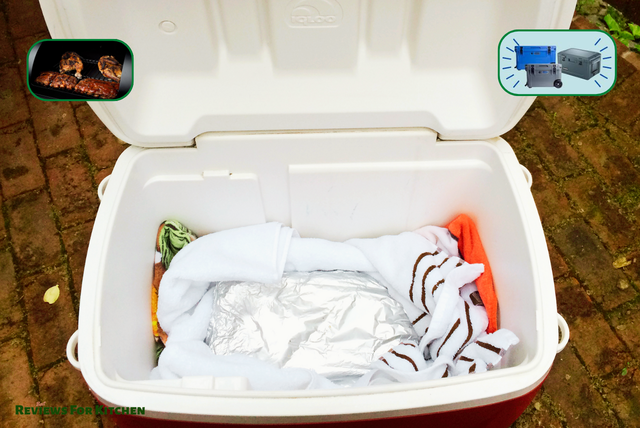
- Rest your meat. Pull it off the smoker, wrap it in butcher paper or foil, and let it sit in a cooler for at least 45–60 minutes before slicing. This step makes a bigger difference than most people expect — the juices redistribute and the meat tenderizes further.
🔗 How to Choose a Cooler for Resting Meat. 🔗 Best Cooler for Resting Meat | Top 5 Product Reviews.
Common Mistakes to Avoid as a New Smoker Owner
I’ve made most of these myself, so consider this a friendly heads-up before you do the same.
Buying too cheap: A $99 offset smoker will frustrate you. Thin steel, poor seals, wild temperature swings. Spend a little more or go with an electric or vertical smoker at that budget instead.
Skipping the seasoning run: Every new smoker needs to be seasoned before you cook on it. Skipping this leaves factory residues and coatings on the cooking surfaces.
Using too much wood: New smokers often overload wood chips or chunks, thinking more smoke = more flavor. It doesn’t. Over-smoking makes food taste like an ashtray.
Not cleaning the ash pan: Accumulated ash holds moisture and speeds up rust. Empty it after every cook — it takes two minutes.
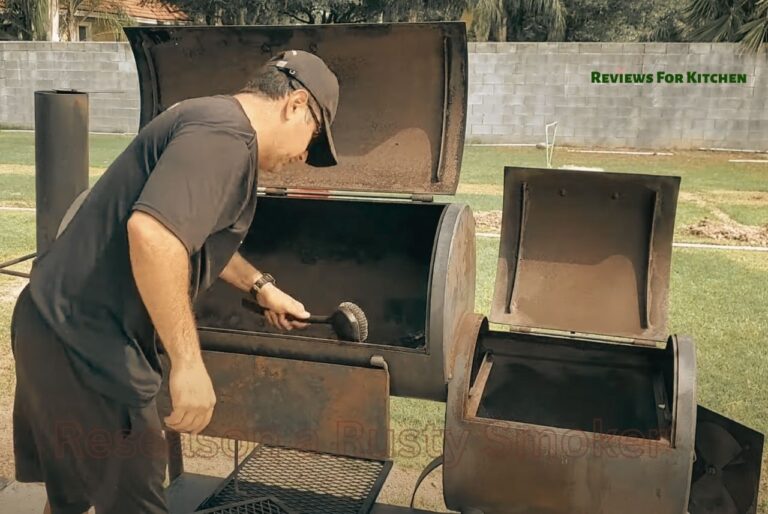
Ignoring a rusted smoker: Surface rust happens. Deal with it early. Wire brush it off, season the area with oil, and run a heat cycle. Left untreated, rust goes from cosmetic to structural quickly.
🔗 How to Reseason a Rusty Smoker?
Frequently Asked Questions
What’s the best smoker for a total beginner?
For most home cooks — yes, genuinely. You get real smoke flavor, consistent temperatures, and the convenience of set-and-forget cooking. The trade-off is that you need electricity and the upfront cost is higher than a basic charcoal setup. But when you factor in the time saved and the consistent results, most people feel it’s worth it.
Is a pellet smoker worth the money?
For most home cooks — yes, genuinely. You get real smoke flavor, consistent temperatures, and the convenience of set-and-forget cooking. The trade-off is that you need electricity and the upfront cost is higher than a basic charcoal setup. But when you factor in the time saved and the consistent results, most people feel it’s worth it.
How much should I spend on my first smoker?
Realistically, $350–$600 is a sweet spot for a first quality smoker. Below $200, build quality drops significantly — especially on offset smokers. Spending more than $1,000 on your first smoker is usually overkill until you know what features actually matter to you.
Can you use a smoker in an apartment or on a balcony?
Electric smokers are your best bet in an apartment — they produce less smoke than charcoal or wood-burning units and don’t require an open flame. That said, always check your building’s rules before firing anything up on a balcony. Some buildings prohibit all outdoor cooking equipment.
What’s the difference between a smoker and a regular grill?
A grill uses high direct heat (400–700°F) to cook food quickly. A smoker uses low indirect heat (225–275°F) plus wood smoke to cook food slowly over hours. The slow cooking process breaks down tough connective tissue in cuts like brisket and ribs, producing that tender, fall-apart texture you can’t replicate on a regular grill.
How long does a smoker last?
A well-built smoker that’s properly maintained can last 10–20 years or more. Heavy-gauge offset smokers from brands like Yoder or Lang are genuinely generational tools. Budget smokers with thin steel typically last 3–7 years before rust and wear become significant issues. Regular cleaning and a good weatherproof cover extend lifespan considerably.
So, Which Smoker Should You Buy?
Here’s my honest bottom line after everything we’ve covered:
If you’re new to smoking and want the easiest possible experience — go with a mid-range pellet smoker. It’s forgiving, produces great flavor, and won’t have you pulling your hair out on your first cook.
If you love the craft of cooking and want the deepest, most authentic BBQ flavor — learn to run an offset smoker. The learning curve is steep but the results are genuinely special.
If you want one tool that does everything — grill, smoke, bake, sear — a kamado is the most versatile cooker you can buy. It’s a bigger upfront investment but it’s hard to outgrow.
And if you just want something simple that works every time without much fuss — an electric smoker or a quality vertical smoker will serve you well without the complexity.
Whatever you pick, the most important thing is to just start. Fire it up, make some chicken thighs, learn how your smoker behaves — and then work your way up to brisket. That’s the path every good backyard pitmaster has followed, and it’s the one that actually sticks.
Happy smoking! If you found this guide helpful, check out our temperature control guide next — knowing how to manage heat is the skill that separates good BBQ from great BBQ.